
跳至内容
无结果
  • Knowledge Base
  • Products
  • About
  • Contact
MastraCare Biotech
MastraCare Biotech
  • Knowledge Base
  • Products
  • About
  • Contact
MastraCare Biotech
MastraCare Biotech

Retinoid Technology

24
  • HPR (Hydroxypinacolone Retinoate) in Anti-Aging Creams: Efficacy Data, Formulation Parameters, and Supplier Qualification Guide
  • Retinoid Technology — Procurement & Cost Guide
  • Retinoid Technology — Troubleshooting & Failure Guide
  • Retinoid Technology — Regulatory & Compliance Guide
  • Retinoid Technology — Supplier Qualification Guide
  • Retinoid Technology — Application & Performance Guide
  • Retinoid Technology — Material Selection Guide
  • NMPA Special Cosmetic Registration for Retinoid Anti-Aging Claims: Compliance Guide
  • Retinol Encapsulation Technology: Liposome vs SLN vs Cyclodextrin Stability Comparison
  • Retinoid Formulation pH & Emulsion Architecture: Stability Parameters
  • Next-Generation Retinoids: Hydroxypinacolone Retinoate & Granactive Retinoid Data
  • Retinoid Skin Tolerance Protocol: Buffering, Frequency & pH Optimization
  • Retinoid Photostability: UV Degradation Rate & Packaging Protection Requirements
  • Bakuchiol as Plant Retinol Alternative: Clinical Evidence & Concentration Guide
  • Retinol vs Retinal vs Retinoic Acid: Conversion Cascade & OEM Formulation Strategy
  • Retinol vs Retinal vs Retinoic Acid: Conversion Cascade & OEM Formulation Strategy
  • NMPA Special Cosmetic Registration for Retinoid Anti-Aging Claims: Compliance Guide
  • Retinoid Formulation pH & Emulsion Architecture: Stability Parameters
  • Next-Generation Retinoids: Hydroxypinacolone Retinoate & Granactive Retinoid Data
  • Retinoid Skin Tolerance Protocol: Buffering, Frequency & pH Optimization
  • Retinoid Photostability: UV Degradation Rate & Packaging Protection Requirements
  • Retinol Encapsulation Technology: Liposome vs SLN vs Cyclodextrin Stability Comparison
  • Bakuchiol as Plant Retinol Alternative: Clinical Evidence & Concentration Guide
  • Retinol vs Retinal vs Retinoic Acid: Conversion Cascade & OEM Formulation Strategy

Peptide & Growth Factor Systems

22
  • Peptide & Growth Factor Systems — Procurement & Cost Guide
  • Peptide & Growth Factor Systems — Troubleshooting & Failure Guide
  • Peptide & Growth Factor Systems — Supplier Qualification Guide
  • Peptide & Growth Factor Systems — Application & Performance Guide
  • Peptide & Growth Factor Systems — Material Selection Guide
  • Peptide & Growth Factor Systems — Technical Specification Overview
  • Peptide Delivery Systems: Liposome Encapsulation vs Free Peptide Bioavailability
  • Signal Peptides for Collagen Stimulation: Matrixyl 3000 vs Argireline Concentration Data
  • Peptide Combinations & Synergy: Multi-Peptide Formulation Design for Anti-Aging
  • Clinical Evidence for Topical Peptides: Study Design, Sample Size & Measurable Outcomes
  • Peptide Stability in Emulsion Systems: pH Range, Temperature & Incompatibility Data
  • EGF & Growth Factor Technology: Recombinant Human EGF Stability & Regulatory Status
  • Carrier Peptides & Trace Elements: Copper Peptide GHK-Cu Delivery & Skin Remodeling
  • Neurotransmitter-Inhibiting Peptides: Acetyl Hexapeptide-3 Mechanism & Clinical Evidence
  • Clinical Evidence for Topical Peptides: Study Design, Sample Size & Measurable Outcomes
  • Peptide Delivery Systems: Liposome Encapsulation vs Free Peptide Bioavailability
  • Peptide Stability in Emulsion Systems: pH Range, Temperature & Incompatibility Data
  • EGF & Growth Factor Technology: Recombinant Human EGF Stability & Regulatory Status
  • Neurotransmitter-Inhibiting Peptides: Acetyl Hexapeptide-3 Mechanism & Clinical Evidence
  • Signal Peptides for Collagen Stimulation: Matrixyl 3000 vs Argireline Concentration Data
  • Peptide Combinations & Synergy: Multi-Peptide Formulation Design for Anti-Aging
  • Carrier Peptides & Trace Elements: Copper Peptide GHK-Cu Delivery & Skin Remodeling

Microbiome & Probiotic Skincare

19
  • Microbiome & Probiotic Skincare — Application & Performance Guide
  • Microbiome & Probiotic Skincare — Material Selection Guide
  • Microbiome & Probiotic Skincare — Technical Specification Overview
  • Microbiome & Probiotic Skincare — Comparison & Upgrade Guide
  • Microbiome & Probiotic Skincare — Procurement & Cost Guide
  • Microbiome & Probiotic Skincare — Troubleshooting & Failure Guide
  • Microbiome & Probiotic Skincare — Regulatory & Compliance Guide
  • Microbiome-Safe Surfactant Selection: Mildness Index & Barrier Disruption Data
  • Probiotic Stability in Cosmetic Formulation: Live vs Lysate & Storage Conditions
  • Microbiome-Friendly Preservation: Phenoxyethanol Alternatives & Challenge Test Data
  • Postbiotic Lysate & Ferment Actives: Lactobacillus Ferment vs Bifida Lysate Data
  • Microbiome Testing for OEM Brands: 16S rRNA Sequencing & Skin Microbiome Claim Support
  • Clinical Evidence for Microbiome Skincare: Study Design & Measurable Outcomes
  • Prebiotic Skincare Ingredients: Inulin, FOS & Beta-Glucan Concentration Guide
  • Skin Microbiome Biology: Diversity Index, pH & Barrier Function Relationship
  • Prebiotic Skincare Ingredients: Inulin, FOS & Beta-Glucan Concentration Guide
  • Clinical Evidence for Microbiome Skincare: Study Design & Measurable Outcomes
  • Microbiome-Friendly Preservation: Phenoxyethanol Alternatives & Challenge Test Data
  • Skin Microbiome Biology: Diversity Index, pH & Barrier Function Relationship

Vitamin C & Antioxidant Systems

19
  • Vitamin C & Antioxidant Systems — Application & Performance Guide
  • Vitamin C & Antioxidant Systems — Material Selection Guide
  • Vitamin C & Antioxidant Systems — Technical Specification Overview
  • Vitamin C & Antioxidant Systems — Comparison & Upgrade Guide
  • Vitamin C & Antioxidant Systems — Procurement & Cost Guide
  • Vitamin C & Antioxidant Systems — Troubleshooting & Failure Guide
  • Vitamin C & Antioxidant Systems — Regulatory & Compliance Guide
  • Vitamin C & Antioxidant Systems — Supplier Qualification Guide
  • Regulatory Status of Vitamin C Derivatives: EU, US, NMPA Permitted List & Limits
  • Vitamin C for Hyperpigmentation: Tyrosinase Inhibition Mechanism & Efficacy Claims
  • L-Ascorbic Acid at 10–20%: Penetration Enhancement & Skin Brightening Clinical Data
  • Vitamin C Formulation pH & Packaging: Oxidation Prevention & Airless System Selection
  • Polyphenol & Plant Antioxidants: Resveratrol, Quercetin & Green Tea EGCG Data
  • Astaxanthin & Carotenoid Antioxidants: Stability, Concentration & Clinical Evidence
  • Antioxidant Network & Synergy: Vitamin C + E + Ferulic Acid Combination Efficacy
  • Vitamin C Derivative Stability: L-Ascorbic Acid vs AA2G vs APPS Oxidation Rate Data
  • Vitamin C Formulation pH & Packaging: Oxidation Prevention & Airless System Selection
  • Polyphenol & Plant Antioxidants: Resveratrol, Quercetin & Green Tea EGCG Data
  • Polyphenol & Plant Antioxidants: Resveratrol, Quercetin & Green Tea EGCG Data

Mineral & UV Technology

17
  • Mineral & UV Technology — Material Selection Guide
  • Mineral & UV Technology — Technical Specification Overview
  • Mineral & UV Technology — Comparison & Upgrade Guide
  • Mineral & UV Technology — Troubleshooting & Failure Guide
  • Mineral & UV Technology — Regulatory & Compliance Guide
  • Mineral & UV Technology — Supplier Qualification Guide
  • Global Sunscreen Regulatory Compliance: EU, US OTC Monograph, NMPA & Japan JCIA — Ingredient Selection Guide
  • SPF & PA+++ Testing: ISO 24444 In Vivo vs In Vitro Method & Critical Wavelength
  • Tinted Mineral SPF Formulation: Iron Oxide Blending & Shade Range Development
  • Water Resistance Testing: FDA 40/80 Minute Protocol & Claim Substantiation
  • Mineral Sunscreen Formulation: Regulatory Compliance Across EU, US & China
  • Organic UV Filter Systems: Avobenzone Photostability & Photostabilizer Combinations
  • Titanium Dioxide & Hybrid UV Filters: Photocatalytic Activity & Surface Coating Solutions
  • Zinc Oxide Particle Science: Nano vs Micro ZnO SPF Performance & White Cast Data
  • Water Resistance Testing: FDA 40/80 Minute Protocol & Claim Substantiation
  • Organic UV Filter Systems: Avobenzone Photostability & Photostabilizer Combinations
  • Titanium Dioxide & Hybrid UV Filters: Photocatalytic Activity & Surface Coating Solutions

Botanical & Adaptogen Actives

25
  • Quercetin, Kaempferol, and β-Sitosterol: Formulating a TCM-Derived Anti-Aging Cream with Verified Antioxidant Activity
  • Habaflair PUR10: Clinical Evidence for Botanical-Peptide Anti-Aging Actives in Daily and Post-Procedure Skincare
  • Juniperus Chinensis Seed Extract in Antioxidant Moisturizing Cream: Formulation Data and Buyer Evaluation Guide
  • Inonotus obliquus and Gastrodia elata Polysaccharide Antioxidant Cream: Formulation Data and Procurement Guide
  • Phycocyanin in Cream Formulation: Antioxidant Performance, Moisture Data, and Buyer Qualification Guide
  • Phycocyanin from Spirulina: Purity Grading, Radical Scavenging Data, and Formulation Guide for Antioxidant Creams
  • Formulation Brief & Sample Request Guide for Botanical & Adaptogen Actives
  • Cosmetic Standards & Regulations Explained for Botanical & Adaptogen Actives
  • Regulatory & Safety Documentation Guide for Botanical & Adaptogen Actives
  • How to Choose Botanical & Adaptogen Actives Formulations
  • Botanical & Adaptogen Actives — Technical Specification Overview
  • Botanical & Adaptogen Actives — Procurement & Cost Guide
  • Botanical & Adaptogen Actives — Troubleshooting & Failure Guide
  • Botanical & Adaptogen Actives — Supplier Qualification Guide
  • Botanical & Adaptogen Actives — Application & Performance Guide
  • Sustainable Sourcing & Traceability for Botanical Actives: COA & Heavy Metal Limits
  • Adaptogen Skin Stress Response: Cortisol Modulation & Clinical Study Design
  • Botanical Extract Standardization: HPLC Marker Compound & COA Requirements
  • TCM-Inspired Cosmetic Actives: Angelica, Peony & Pearl Powder Standardization
  • Green Tea & Polyphenol Botanicals: EGCG Stability & Antioxidant Capacity Data
  • Ginseng & Adaptogen Actives: Ginsenoside Profile & Anti-Aging Clinical Evidence
  • Licorice Root & Whitening Botanicals: Glabridin Concentration & Tyrosinase Inhibition
  • Centella Asiatica & Wound Healing Botanicals: Madecassoside vs Asiaticoside Data
  • Botanical Extract Standardization: HPLC Marker Compound & COA Requirements
  • Centella Asiatica & Wound Healing Botanicals: Madecassoside vs Asiaticoside Data

Waterless & Concentrated Formulation

13
  • Waterless & Concentrated Formulation — Procurement & Cost Guide
  • Waterless & Concentrated Formulation — Troubleshooting & Failure Guide
  • Waterless & Concentrated Formulation — Supplier Qualification Guide
  • Waterless & Concentrated Formulation — Application & Performance Guide
  • Waterless & Concentrated Formulation — Technical Specification Overview
  • Consumer Perception of Waterless Formats: Texture Expectation & Education Strategy
  • Sustainability Positioning for Waterless Skincare: Carbon Footprint & Claim Support
  • Packaging for Waterless Products: Airless, Stick & Refillable Format Compatibility
  • Preservative-Free Waterless Formulation: Water Activity & Microbial Risk Assessment
  • Oil-to-Milk Cleansing Science: HLB Value & Phase Inversion Emulsification
  • Concentrated Actives Delivery: Waterless Serum Actives Loading & Penetration Data
  • Solid Skincare Technology: Wax Matrix Selection & Melting Point Stability Data
  • Anhydrous & Oil-Based Formulation: Emollient Selection & Skin Feel Engineering

Anti-Aging

29
  • Formulation Brief & Sample Request Guide for Anti-Aging
  • Cosmetic Standards & Regulations Explained for Anti-Aging
  • Anti-Aging — Industry Case Study
  • Anti-Aging — Safety & Risk Assessment
  • Anti-Aging — Design Engineering Reference
  • Anti-Aging — Lifecycle & Maintenance Guide
  • Anti-Aging — Testing & Validation Protocol
  • Anti-Aging — Storage & Handling Guide
  • Anti-Aging — Installation & Integration Guide
  • Anti-Aging — Supplier Qualification Guide
  • Anti-Aging — Application & Performance Guide
  • Anti-Aging — Material Selection Guide
  • Anti-Aging — Technical Specification Overview
  • Anti-Aging — Comparison & Upgrade Guide
  • Anti-Aging — Procurement & Cost Guide
  • Anti-Aging — Troubleshooting & Failure Guide
  • Anti-Aging — Regulatory & Compliance Guide
  • Anti-Aging: Cost Optimization Guide
  • Anti-Aging Formulation Troubleshooting Guide: 5 Failure Modes and How to Fix Them
  • Anti-Aging Market Positioning Guide: Claims, Actives & OEM Capabilities
  • Anti-Aging Supplier Qualification Guide: Factory Audit, COA Review & Incoming QC
  • Anti-Aging Product Stability: Labile Active Protection & Accelerated Testing Protocol
  • Anti-Aging Claim Substantiation: EU, US & NMPA Permissible Claim Language Guide
  • Premium vs Mass Anti-Aging Formulation: Development Tier Comparison & Cost Structure
  • Anti-Aging Ingredient Hierarchy: Proven Actives vs Trending Ingredients — Regulatory Compliance Guide (EU, US, China)
  • Neck & Body Anti-Aging: Firming Active Selection & Large Surface Area Formulation
  • Eye Anti-Aging & Dark Circle Treatment: Caffeine, Peptide & Retinol Eye-Area Protocol
  • Peptide Firming Cream: Multi-Peptide Combination & Clinical Claim Substantiation
  • Retinol Anti-Aging Serum Development: Active Loading, pH & Encapsulation Strategy

Brightening & Whitening

20
  • Whitening Cream for Sensitive Skin: Clinical Efficacy Data on Brightening and Barrier Repair with a Five-Active System
  • Formulation Brief & Sample Request Guide for Brightening & Whitening
  • Cosmetic Standards & Regulations Explained for Brightening & Whitening
  • Brightening & Whitening — Material Selection Guide
  • Brightening & Whitening — Technical Specification Overview
  • Brightening & Whitening — Comparison & Upgrade Guide
  • Brightening & Whitening — Procurement & Cost Guide
  • Brightening & Whitening — Regulatory & Compliance Guide
  • Brightening & Whitening — Supplier Qualification Guide
  • Brightening & Whitening — Application & Performance Guide
  • Brightening & Whitening: Troubleshooting Guide
  • Brightening & Whitening: Market Positioning Guide
  • Clinical Study Design for Brightening Claims: ITA Angle, Mexameter & Photography Protocol
  • Combination Brightening Strategy: Melanin Synthesis + Transfer + Exfoliation Approach
  • Brightening Claim Compliance: EU Restricted List, NMPA Whitening Cosmetic Regulation
  • Tyrosinase Inhibition Actives: Alpha-Arbutin vs Kojic Acid vs Tranexamic Acid Data
  • Body Brightening & Hyperpigmentation: Large-Area Application & Active Penetration
  • Brightening Mask & Spot Treatment: High-Concentration Active Delivery & Contact Time
  • Niacinamide & Multi-Active Brightening: Concentration, Compatibility & Clinical Data
  • Vitamin C Brightening Serum: L-Ascorbic Acid vs Derivative Selection & pH Strategy

Acne & Blemish Control

29
  • Formulation Brief & Sample Request Guide for Acne & Blemish Control
  • Cosmetic Standards & Regulations Explained for Acne & Blemish Control
  • Acne & Blemish Control — Troubleshooting & Failure Guide
  • Acne & Blemish Control — Industry Case Study
  • Acne & Blemish Control — Safety & Risk Assessment
  • Acne & Blemish Control — Design Engineering Reference
  • Acne & Blemish Control — Lifecycle & Maintenance Guide
  • Acne & Blemish Control — Testing & Validation Protocol
  • Acne & Blemish Control — Storage & Handling Guide
  • Acne & Blemish Control — Installation & Integration Guide
  • Acne & Blemish Control — Troubleshooting & Failure Guide
  • Acne & Blemish Control — Application & Performance Guide
  • Acne & Blemish Control — Material Selection Guide
  • Acne & Blemish Control — Technical Specification Overview
  • Acne & Blemish Control — Comparison & Upgrade Guide
  • Acne & Blemish Control — Procurement & Cost Guide
  • Acne & Blemish Control — Regulatory & Compliance Guide
  • Acne & Blemish Control: Market Positioning Guide
  • Acne & Blemish Control: Cost Optimization Guide
  • Acne & Blemish Control: Troubleshooting Guide
  • Acne & Blemish Control: Supplier Qualification Guide
  • Post-Acne Hyperpigmentation Treatment: Brightening + Barrier Repair Combined Strategy
  • Regulatory Status of Acne Actives: US FDA OTC Drug Monograph & EU Cosmetic Limits
  • Acne-Safe Formulation Principles: Non-Comedogenic Rating & Comedogenicity Testing
  • Anti-C. acnes Actives: Benzoyl Peroxide vs Azelaic Acid vs Tea Tree Clinical Evidence
  • Anti-Acne Cleanser Formulation: Surfactant Mildness & Antibacterial Active Selection
  • Acne Spot Treatment & Patch: Salicylic Acid, Benzoyl Peroxide & Hydrocolloid Specs
  • Sebum Control & Pore Minimizing Moisturizer: Niacinamide, Zinc & Mattifying Agent Data
  • BHA Acne Serum & Exfoliating Toner: Salicylic Acid 0.5–2% Formulation Guide

Barrier Repair & Sensitive Skin

23
  • Centella Asiatica, Ceramide NP, and Panthenol for Post-Laser Barrier Repair: Split-Face RCT Data Evaluated
  • Formulation Brief & Sample Request Guide for Barrier Repair & Sensitive Skin
  • Cosmetic Standards & Regulations Explained for Barrier Repair & Sensitive Skin
  • Barrier Repair & Sensitive Skin — Storage & Handling Guide
  • Barrier Repair & Sensitive Skin — Troubleshooting & Failure Guide
  • Barrier Repair & Sensitive Skin — Regulatory & Compliance Guide
  • Barrier Repair & Sensitive Skin — Application & Performance Guide
  • Barrier Repair & Sensitive Skin — Material Selection Guide
  • Barrier Repair & Sensitive Skin — Technical Specification Overview
  • Barrier Repair & Sensitive Skin — Comparison & Upgrade Guide
  • Barrier Repair & Sensitive Skin — Procurement & Cost Guide
  • Barrier Repair & Sensitive Skin: Cost Optimization Guide
  • Barrier Repair & Sensitive Skin: Supplier Qualification Guide
  • Barrier Repair & Sensitive Skin: Troubleshooting Guide
  • Barrier Repair & Sensitive Skin: Market Positioning Guide
  • Regulatory Considerations for Sensitive Skin Products: EU, FDA & NMPA Framework
  • Sensitive Skin Claim Substantiation: Dermatologist-Tested & Hypoallergenic Evidence
  • Microbiome-Friendly Barrier Formulation: Preservative Selection & pH Optimization
  • Skin Barrier Testing: TEWL Measurement, Corneometer & Clinical Improvement Data
  • Eczema-Adjacent & Dry Skin Relief: Occlusive, Humectant & Emollient Layering Strategy
  • Hypoallergenic & Fragrance-Free Formulation: Allergen-Free Ingredient Selection & Patch Test Protocol
  • Soothing & Anti-Redness Treatment: Centella Asiatica, Bisabolol & Allantoin Data
  • Ceramide Barrier Repair Moisturizer: Ceramide 1/3/6-II Ratio & Lipid Matrix Formulation

Sun Protection & Antioxidant Defense

13
  • Sun Protection & Antioxidant Defense — Procurement & Cost Guide
  • Sun Protection & Antioxidant Defense — Troubleshooting & Failure Guide
  • Sun Protection & Antioxidant Defense — Application & Performance Guide
  • Sun Protection & Antioxidant Defense — Material Selection Guide
  • SPF in Moisturizer: Emulsion Architecture Compatibility & Sun Filter Stability
  • Antioxidant + SPF Combination Claims: Evidence Base & Permissible Claim Language
  • Global SPF Regulatory Compliance: EU, FDA OTC Monograph, NMPA & Japan JCIA Guide
  • Water-Resistant Sunscreen: Film Former Selection & FDA 40/80 Minute Test Protocol
  • SPF in Moisturizer: Emulsion Architecture Compatibility & Sun Filter Stability
  • Broad-Spectrum SPF Formulation: Critical Wavelength, UVA-PF & PA+++ Rating Guide
  • After-Sun & Skin Recovery: Soothing Actives, Hydration & DNA Repair Ingredient Data
  • Antioxidant Photoprotection Serum: Vitamin C + E + Ferulic Acid UV Defense Data
  • SPF Daily Moisturizer & Fluid: UV Filter Selection, Elegance & Skin Feel Engineering

Scalp Health & Hair Growth

15
  • Scalp Health & Hair Growth — Procurement & Cost Guide
  • Scalp Health & Hair Growth — Troubleshooting & Failure Guide
  • Scalp Health & Hair Growth — Regulatory & Compliance Guide
  • Scalp Health & Hair Growth — Supplier Qualification Guide
  • Scalp Health & Hair Growth — Application & Performance Guide
  • Scalp Health & Hair Growth — Material Selection Guide
  • Scalp Health & Hair Growth — Technical Specification Overview
  • Regulatory Status of Hair Growth Actives: Drug vs Cosmetic Classification by Market
  • Hair Loss Claim Substantiation: TrichoScan, Hair Count & Tensile Strength Methods
  • Scalp Serum Formulation: Low-Viscosity Delivery, Alcohol Content & Penetration Data
  • Hair Growth Clinical Evidence: Follicle Stimulation Actives & Study Design Guide
  • Scalp Microbiome Rebalancing: Prebiotic, Postbiotic & Microbiome-Safe Preservation
  • Hair Strengthening & Damage Repair: Keratin, Amino Acid & Bond-Building Technology
  • Dandruff & Seborrheic Scalp: ZPT vs Piroctone Olamine vs Ketoconazole Comparison
  • Anti-Hair Loss Serum: Minoxidil Alternatives, Peptide & Botanical Active Data

Body Firming & Slimming

18
  • Formulation Brief & Sample Request Guide for Body Firming & Slimming
  • Body Firming & Slimming — Material Selection Guide
  • Body Firming & Slimming — Technical Specification Overview
  • Body Firming & Slimming — Comparison & Upgrade Guide
  • Body Firming & Slimming — Procurement & Cost Guide
  • Body Firming & Slimming — Regulatory & Compliance Guide
  • Body Firming & Slimming — Supplier Qualification Guide
  • Body Firming & Slimming — Application & Performance Guide
  • Body Firming & Slimming: Market Positioning Guide
  • Body Firming & Slimming: Troubleshooting Guide
  • Premium vs Mass Body Firming: Active Loading, Texture & Packaging Tier Comparison
  • Body Firming Regulatory Compliance: Cosmetic vs Drug Classification by Market
  • Texture Engineering for Body Products: Spreadability, Absorption & Skin Feel Data
  • Body Firming Claim Substantiation: Ultrasound, Caliper & Circumference Measurement
  • Lipolytic Actives: Carnitine, Caffeine & Forskolin Mechanism & OEM Formulation
  • Firming Body Lotion: Collagen-Stimulating Actives & Large-Area Application Strategy
  • Stretch Mark Prevention & Repair: Centella, Retinol & Peptide Clinical Data
  • Cellulite & Body Contouring: Caffeine Mechanism, Concentration & Clinical Evidence

Men's Grooming

12
  • Men’s Grooming — Comparison & Upgrade Guide
  • Men’s Grooming — Procurement & Cost Guide
  • Men’s Grooming — Application & Performance Guide
  • Men’s Grooming — Technical Specification Overview
  • Scalp Care for Men: Anti-Dandruff, Hair Growth & Sebum Control Active Combination
  • Regulatory Considerations for Men’s Grooming: Global Market Label & Claim Guide
  • Men’s Grooming Market Positioning: Fragrance Profile, Packaging & Claim Language
  • Men’s Skin Physiology vs Female Skin: pH, TEWL, Sebum & Thickness Difference Data
  • Men’s Anti-Aging Serum: Stability, Compatibility & Active Loading Guide
  • Beard Care Formulation: Softening, Conditioning & Fragrance Strategy for Beard Oil
  • Post-Shave Treatment: Soothing, Anti-Razor Bump & Skin Repair Active Selection
  • Men’s Facial Moisturizer: Male Skin Physiology, Sebum Rate & Fast-Absorbing Texture

Face Serum

11
  • Face Serum — Application & Performance Guide
  • Face Serum — Material Selection Guide
  • Face Serum — Technical Specification Overview
  • Face Serum Regulatory Labelling: INCI, Net Weight & Market-Specific Requirements
  • Packaging Compatibility for Face Serum: Airless vs Dropper vs Pump Selection
  • Active Ingredient Loading in Serum: Solubility Limit, Penetration & Stability Data
  • Face Serum Preservation: Water-Phase Challenge Test & Broad-Spectrum Coverage
  • Biphasic & Layering Serum: Phase Separation Design & Consumer Instruction Strategy
  • Ampoule & Concentrated Treatment: High Active Loading & Single-Use Packaging Data
  • Oil & Dry-Touch Serum: Emollient Selection, Skin Feel & Rapid Absorption Strategy
  • Aqueous Hydrating Serum Formulation: HA Molecular Weight, Viscosity & Preservation

Moisturizer & Cream

21
  • Emulsifier Selection for Face Cream and Moisturizer Formulation: Surfactants, Polymers, and Solid Particles
  • Emulsifier Systems in Cosmetic Creams: Formulation Guide for O/W and W/O Cream Development
  • Emulsifier Systems in Cosmetic Creams: Formulation Guide for O/W and W/O Cream Development
  • Emulsifier Selection for Face Cream and Moisturizer Formulation: Surfactants, Polymers, and Solid Particles
  • Endocrine Disruptor Migration in Children’s Face Cream: LC-MS/MS Detection Method and Packaging Compliance Guide
  • Moisturizer & Cream — Material Selection Guide
  • Moisturizer & Cream — Comparison & Upgrade Guide
  • Moisturizer & Cream — Procurement & Cost Guide
  • Moisturizer & Cream — Troubleshooting & Failure Guide
  • Moisturizer & Cream — Regulatory & Compliance Guide
  • Moisturizer & Cream — Supplier Qualification Guide
  • Moisturizer & Cream — Application & Performance Guide
  • Moisturizer & Cream — Technical Specification Overview
  • Moisturizer Regulatory Labelling: EU, FDA & NMPA Cosmetic Label Requirements
  • Barrier Repair & Ceramide Cream: Ceramide 1/3/6-II Ratio & Lipid Matrix Structure
  • Moisturizer Texture Engineering: Rheology Modifier, Thickener & Sensory Profile
  • Active Ingredient Incorporation in Emulsion: pH, Temperature & Order of Addition
  • Moisturizer Stability Testing: Centrifuge, Freeze-Thaw & 45°C Accelerated Protocol
  • Emulsifier Selection Guide: HLB System, Emulsion Stability & Skin Feel Comparison
  • Rich Cream & W/O Emulsion: Occlusive Ratio, TEWL Reduction & Skin Feel Data
  • Lightweight Lotion & Gel-Cream: O/W Emulsifier Selection & Texture Engineering

Face Mask

14
  • Face Mask — Troubleshooting & Failure Guide
  • Face Mask — Regulatory & Compliance Guide
  • Face Mask — Supplier Qualification Guide
  • Face Mask — Application & Performance Guide
  • Face Mask — Material Selection Guide
  • Face Mask — Technical Specification Overview
  • Face Mask Regulatory Compliance: EU, FDA & NMPA Category Classification Guide
  • Sleeping Mask vs Overnight Cream: Formulation Difference & Claim Positioning
  • Face Mask Preservation Strategy: High-Water Activity & Challenge Test Protocol
  • Sheet Mask Substrate Comparison: Lyocell vs Nylon vs Bio-Cellulose Performance Data
  • Bubble & Carbonated Mask: CO2 Generation Mechanism, Stability Guide & Skin Oxygenation Claims
  • Clay & Mud Mask: Kaolin vs Bentonite vs Ghassoul Adsorption & Sebum Control Data
  • Sleeping Mask & Leave-On Treatment: Film Former, Occlusion & Overnight Active Delivery
  • Sheet Mask Essence & Substrate: Non-Woven Fabric Selection & Active Loading Data

Sunscreen

13
  • Sunscreen — Regulatory & Compliance Guide
  • Sunscreen — Supplier Qualification Guide
  • Sunscreen — Application & Performance Guide
  • Sunscreen — Material Selection Guide
  • Sunscreen — Technical Specification Overview
  • Global Sunscreen Regulatory Compliance: EU, US OTC, NMPA & Japan JCIA Guide
  • Hybrid & Tinted SPF: Iron Oxide Integration, Shade Development & SPF Maintenance
  • Tinted SPF & Colour Cosmetic Claims: Regulatory Classification & Label Requirements
  • Sunscreen Sensory Engineering: Skin Feel, White Cast & Finish Type by Market
  • Water-Resistant Sunscreen: Film Former Selection & FDA 40/80 Minute Test Protocol
  • SPF Testing Protocol: ISO 24444 In Vivo Method & Critical Wavelength Measurement
  • Chemical & Organic UV Sunscreen: Filter Selection, Photostability & SPF Boosting
  • Mineral Sunscreen Formulation: ZnO Particle Size, Dispersion & White Cast Reduction

Cleanser

20
  • Formulation Brief & Sample Request Guide for Cleanser
  • Cosmetic Standards & Regulations Explained for Cleanser
  • Cleanser — Material Selection Guide
  • Cleanser — Technical Specification Overview
  • Cleanser — Comparison & Upgrade Guide
  • Cleanser — Procurement & Cost Guide
  • Cleanser — Troubleshooting & Failure Guide
  • Cleanser — Regulatory & Compliance Guide
  • Cleanser — Supplier Qualification Guide
  • Cleanser — Application & Performance Guide
  • Cleanser Formulation Troubleshooting Guide: 5 Common Failures and How We Fix Them
  • Cleanser Market Positioning Guide: Claims, Clinical Language & OEM Capabilities
  • Cleanser Regulatory Labelling: EU, FDA & NMPA Cosmetic Rinse-Off Category Guide
  • Makeup Removal Efficacy Testing: ASTM E1173 & Sebum Removal Measurement Method
  • Preservative Strategy for Rinse-Off Cleansers: Low Contact Time & Challenge Test
  • Cleanser pH & Microbiome Impact: Skin pH 4.5–5.5 & Barrier Disruption Data
  • Surfactant Mildness Index: Zein Test, TEWL Impact & Skin Barrier Safety Data
  • Oil Cleanser & Cleansing Balm: Emulsifier HLB, Phase Inversion & Makeup Removal
  • Cream & Milk Cleanser: Mild Surfactant, Emollient & Skin Feel Engineering
  • Foaming & Gel Cleanser: Surfactant Blend, HLB & Foam Quality Data

Eye Care

16
  • Cosmetic Standards & Regulations Explained for Eye Care
  • Eye Care — Procurement & Cost Guide
  • Eye Care — Troubleshooting & Failure Guide
  • Eye Care — Regulatory & Compliance Guide
  • Eye Care — Supplier Qualification Guide
  • Eye Care — Application & Performance Guide
  • Eye Care — Material Selection Guide
  • Eye Care Formulation Troubleshooting Guide: 5 Failure Modes and How We Fix Them
  • Eye Patch Technology: Hydrogel vs Bio-Cellulose Substrate & Active Delivery Data
  • Eye Cream Texture Engineering: Low-Irritant Emulsifier & Film-Former Selection
  • Eye Area Regulatory Requirements: EU, FDA & NMPA Periorbital Product Guidelines
  • Retinol in Eye Area: Low Concentration Tolerance Protocol & Encapsulation Strategy
  • Dark Circle Targeting Actives: Pigmentation vs Vascular vs Shadow Cause & Treatment
  • Periorbital Skin Formulation Constraints: Ophthalmologist-Tested & Sensitizer-Free
  • Eye Serum & Patch: Lightweight Delivery, Film Former & Hydrogel Patch Specification
  • Eye Cream & Depuffing Treatment: Caffeine, Peptide & Vitamin K Active Selection

Facial Oil

16
  • Facial Oil — Comparison & Upgrade Guide
  • Facial Oil — Procurement & Cost Guide
  • Facial Oil — Troubleshooting & Failure Guide
  • Facial Oil — Regulatory & Compliance Guide
  • Facial Oil — Supplier Qualification Guide
  • Facial Oil — Application & Performance Guide
  • Facial Oil — Material Selection Guide
  • Facial Oil — Technical Specification Overview
  • Facial Oil Sensory Profile: Dry vs Rich Finish & Absorption Speed Engineering
  • Facial Oil Regulatory Labelling: INCI Nomenclature & Natural Claim Compliance
  • Facial Oil Packaging Compatibility: Dropper Seal, Pump & Material Interaction Data
  • Lipophilic Active Delivery in Oil Base: Retinol, Vitamin E & Botanical Extraction — Regulatory Compliance Guide
  • Carrier Oil Stability: Oxidation Index, Peroxide Value & Antioxidant Protection
  • Fatty Acid Profile for Skin Type: Linoleic vs Oleic Acid Ratio & Skin Match Guide
  • Dry Oil & Hybrid Oil Serum: Fast-Absorbing Emollient & Spreadability Data
  • Pure Oil Blend & Botanical Oil: Carrier Oil Oxidative Stability & Comedogenic Rating

Toner & Essence Water

14
  • Toner & Essence Water — Troubleshooting & Failure Guide
  • Toner & Essence Water — Regulatory & Compliance Guide
  • Toner & Essence Water — Supplier Qualification Guide
  • Toner & Essence Water — Application & Performance Guide
  • Toner & Essence Water — Material Selection Guide
  • Toner & Essence Water — Technical Specification Overview
  • Toner Regulatory Classification: Cosmetic vs Quasi-Drug Status by Market Guide
  • Toner Texture & Skin Feel: Slipperiness, Absorption & Layering Compatibility
  • Low Viscosity Active Delivery: Penetration Enhancer Selection & Efficacy Data
  • Alcohol in Toner: Ethanol Concentration, Skin Barrier Impact & Alternatives
  • Toner Preservation Challenge: High Water Activity & Broad-Spectrum Coverage
  • Fermented & Japanese-Style Essence: Fermentation Filtrate Actives & Efficacy Data
  • Exfoliating & AHA BHA Toner: Acid Concentration, pH & Skin Tolerance Protocol
  • Hydrating & Balancing Toner: Humectant System, Low Viscosity & pH Optimization

Lip Care

11
  • Lip Care — Application & Performance Guide
  • Lip Care — Material Selection Guide
  • Lip Care: Supplier Qualification Guide
  • Lip Care Regulatory Labelling: EU, FDA & NMPA Category & Colorant Approval Guide
  • Lip Care Active Ingredients: Ceramide, Vitamin E & Peptide Evidence for Lip Use
  • Lip Balm Packaging: Twist-Up Tube, Pot & Squeeze Tube Material Compatibility
  • Tinted Lip Balm: Pigment Dispersion, Color Stability & Regulatory Compliance
  • SPF Lip Balm Formulation: UV Filter Compatibility & SPF Testing in Anhydrous Base
  • Lip-Safe Ingredient Compliance: Ingestion Risk & Permitted Colorant List by Market
  • Lip Mask & Plumping Treatment: Hyaluronic Acid, Peptide & Capsaicin Plumping Data
  • Lip Balm & Nourishing Treatment: Wax Matrix, Butter Selection & Melting Point Data

Body Care

20
  • Formulation Brief & Sample Request Guide for Body Care
  • Cosmetic Standards & Regulations Explained for Body Care
  • Body Care — Application & Performance Guide
  • Body Care — Material Selection Guide
  • Body Care — Technical Specification Overview
  • Body Care — Procurement & Cost Guide
  • Body Care — Troubleshooting & Failure Guide
  • Body Care — Regulatory & Compliance Guide
  • Body Care: Cost Optimization Guide
  • Body Care Formulation Troubleshooting Guide: 5 Failure Modes and How We Fix Them
  • Body Care: Supplier Qualification Guide
  • Body Care: Market Positioning Guide
  • Body Lotion & Cream Formulation: Large Surface Spreadability & Absorption Strategy
  • Body Care Regulatory Labelling: EU, FDA & NMPA Cosmetic Category Requirements
  • Body Care Fragrance Strategy: Substantivity, Allergen Limits & IFRA Compliance
  • Active Delivery for Body Firming: Caffeine, Retinol & Peptide Large-Area Efficacy
  • Body Exfoliant Regulatory Compliance: Microplastic-Free & EU Rinse-Off Regulation
  • Body Moisturizer Occlusive Strategy: Petrolatum vs Dimethicone vs Shea Butter Data
  • Body Oil & Dry Oil Spray: Emollient Blend, Pump Atomization & Skin Feel Data
  • Body Scrub & Exfoliator: Physical Exfoliant Particle Size & Skin Abrasion Data

Shampoo & Conditioner

16
  • Shampoo & Conditioner — Technical Specification Overview
  • Shampoo & Conditioner — Comparison & Upgrade Guide
  • Shampoo & Conditioner — Procurement & Cost Guide
  • Shampoo & Conditioner — Troubleshooting & Failure Guide
  • Shampoo & Conditioner — Supplier Qualification Guide
  • Shampoo & Conditioner — Application & Performance Guide
  • Shampoo & Conditioner — Material Selection Guide
  • Shampoo & Conditioner: Market Positioning Guide
  • Shampoo & Conditioner Regulatory Compliance: EU, FDA & NMPA Label Requirements
  • Shampoo Preservation Strategy: Challenge Test & Broad-Spectrum Coverage for Rinse-Off
  • Hair Color Protection Shampoo: Fade Resistance & Film-Former Selection Strategy
  • Conditioning Deposition Technology: Cationic Polymer vs Quaternary Ammonium Data
  • Surfactant Mildness for Hair: Zwitterionic Blend, TEWL Impact & Scalp Safety Data
  • Conditioner & Hair Mask: Cationic Conditioning Deposition & Detangling Mechanism
  • Anti-Dandruff Shampoo: ZPT vs Piroctone Olamine vs Ketoconazole Efficacy Data
  • Mild & Sulfate-Free Shampoo: Anionic + Amphoteric Surfactant Blend & Foam Data

Scalp Care

12
  • Scalp Care — Supplier Qualification Guide
  • Scalp Care — Application & Performance Guide
  • Scalp Care — Material Selection Guide
  • Scalp Care — Technical Specification Overview
  • Scalp Care Regulatory Classification: Cosmetic vs Quasi-Drug Status by Market Guide
  • Scalp Microbiome Testing: 16S rRNA Sequencing & Microbiome-Friendly Claim Support
  • Hair Growth Claim Substantiation: TrichoScan, Phototrichogram & Hair Tensile Test
  • Anti-Inflammatory Scalp Actives: Salicylic Acid, Niacinamide & Centella — Regulatory Compliance Guide
  • Scalp Serum Low-Viscosity Formulation: Penetration Enhancer & Alcohol Content Guide
  • Leave-On vs Rinse-Off Scalp Treatment: Delivery Strategy & Active Contact Time Data
  • Scalp Microbiome & Sebum Control: Prebiotic, ZPT & Sebum-Regulating Active Guide
  • Hair Growth & Follicle Activation Serum: Peptide, Caffeine & Botanical Active Data

Acid Exfoliation Technology

35
  • Formulation Brief & Sample Request Guide for Acid Exfoliation Technology
  • Cosmetic Standards & Regulations Explained for Acid Exfoliation Technology
  • Acid Exfoliation Technology — Testing & Validation Protocol
  • Acid Exfoliation Technology — Storage & Handling Guide
  • Acid Exfoliation Technology — Installation & Integration Guide
  • Acid Exfoliation Technology — Industry Case Study
  • Acid Exfoliation Technology — Safety & Risk Assessment
  • Acid Exfoliation Technology — Design Engineering Reference
  • Acid Exfoliation Technology — Regulatory & Compliance Guide
  • Acid Exfoliation Technology — Application & Performance Guide
  • Acid Exfoliation Technology — Material Selection Guide
  • Acid Exfoliation Technology — Technical Specification Overview
  • Acid Exfoliation Technology — Comparison & Upgrade Guide
  • Acid Exfoliation Technology — Procurement & Cost Guide
  • Acid Exfoliation Technology — Troubleshooting & Failure Guide
  • Acid Exfoliation Technology: Cost Optimization Guide
  • Acid Exfoliation Technology: Troubleshooting Guide for Common Formulation Failures
  • Acid Exfoliation Technology: Market Positioning Guide
  • Acid Exfoliation Technology: Supplier Qualification Guide
  • Chemical Peel Concentration Science: AHA 10–30% Neutralization & Skin Response Protocol
  • BHA & Salicylic Acid Systems: Oil-Soluble Penetration & Comedolytic Concentration Guide
  • Combining Acids with Retinoids & Vitamin C: Compatibility & Formulation Sequencing
  • Acid Exfoliant Stability: pH Drift, Preservative Compatibility & Packaging Selection
  • Azelaic Acid Dual-Function Formulation: Antibacterial & Brightening Concentration Data
  • PHA & Polyhydroxy Acids: Gluconolactone vs Lactobionic Acid for Sensitive Skin
  • AHA Science & Formulation: Glycolic vs Lactic vs Mandelic Acid pH & Efficacy Data
  • Combining Acids with Retinoids & Vitamin C: Compatibility & Formulation Sequencing
  • Regulatory Limits for Acid Actives: EU, US FDA, China NMPA Concentration Thresholds
  • Azelaic Acid Dual-Function Formulation: Antibacterial & Brightening Concentration Data
  • BHA & Salicylic Acid Systems: Oil-Soluble Penetration & Comedolytic Concentration Guide
  • AHA Science & Formulation: Glycolic vs Lactic vs Mandelic Acid pH & Efficacy Data
  • Acid Exfoliant Stability: pH Drift, Preservative Compatibility & Packaging Selection
  • Chemical Peel Concentration Science: AHA 10–30% Neutralization & Skin Response Protocol
  • PHA & Polyhydroxy Acids: Gluconolactone vs Lactobionic Acid for Sensitive Skin
  • Glycolic Acid Chemical Peel for Acne Vulgaris: Concentration & Protocol Guide for OEM Buyers

Hydration & Moisture

16
  • Enteromorpha Polysaccharide in Moisturizing Cream: Humectant, UV Attenuation, and Antioxidant Performance Evaluation
  • Hydration & Moisture — Procurement & Cost Guide
  • Hydration & Moisture — Troubleshooting & Failure Guide
  • Hydration & Moisture — Regulatory & Compliance Guide
  • Hydration & Moisture — Supplier Qualification Guide
  • Hydration & Moisture — Application & Performance Guide
  • Hydration & Moisture: Market Positioning Guide
  • Hydration & Moisture: Cost Optimization Guide
  • Hydration Claim Substantiation: Corneometer, Skicon & Moisture Mapping Methods
  • Hydration Boosting Actives Beyond HA: Polyglutamic Acid, Betaine & Tremella Extract
  • Hyaluronic Acid Grades: 3-Weight HA Complex vs Single Grade Performance Data
  • Moisture Retention Testing: Corneometer Measurement & TEWL Clinical Study Protocol
  • Long-Lasting Hydration: Film-Forming Humectant vs Occlusive Mechanism Comparison
  • Hydrating Toner & Essence for Dehydrated Skin: Low-Viscosity HA & Penetration Booster
  • Deep Moisture Barrier Cream: Occlusive, Humectant & Emollient Layering Strategy
  • Hyaluronic Acid Hydration Serum: Molecular Weight Selection & Skin Penetration Data

Encapsulation Technology

19
  • Camel Oil Microcapsule Encapsulation Technology: Process Optimization and Facial Cream Application
  • Formulation Brief & Sample Request Guide for Encapsulation Technology
  • Cosmetic Standards & Regulations Explained for Encapsulation Technology
  • Encapsulation Technology — Comparison & Upgrade Guide
  • Encapsulation Technology — Procurement & Cost Guide
  • Encapsulation Technology — Troubleshooting & Failure Guide
  • Encapsulation Technology — Regulatory & Compliance Guide
  • Encapsulation Technology — Supplier Qualification Guide
  • Encapsulation Technology — Application & Performance Guide
  • Encapsulation Technology — Material Selection Guide
  • Encapsulation Technology — Technical Specification Overview
  • Encapsulation for Labile Actives: Retinol, Vitamin C & Peptide Protection Comparison
  • Liposome & Nanoliposome Encapsulation: Particle Size, Entrapment Efficiency & Stability
  • Regulatory Status of Nanoencapsulation in Cosmetics: EU Nano Regulation & NMPA
  • Encapsulation Efficiency Testing: HPLC Quantification & In Vitro Release Method
  • Emulsion-Based Microencapsulation: Double Emulsion W/O/W & Active Retention — Regulatory Compliance Guide
  • Polymer Microsphere Encapsulation: PLGA Degradation Rate & Controlled Release Data
  • Cyclodextrin Inclusion Complex: Cavity Diameter, Loading Capacity & Release Profile
  • Solid Lipid Nanoparticle Technology: SLN vs NLC Structure & Active Protection Data
View Categories
  • 首页
  • 文档
  • Formulation Technology
  • Botanical & Adaptogen Actives
  • Habaflair PUR10: Clinical Evidence for Botanical-Peptide Anti-Aging Actives in Daily and Post-Procedure Skincare

Habaflair PUR10: Clinical Evidence for Botanical-Peptide Anti-Aging Actives in Daily and Post-Procedure Skincare

Dr. Nina Huang
更新 2026年6月19日

10 min read

TL;DR #

If you’re evaluating botanical actives for an anti-aging cream brief, Habaflair PUR10 is one of the more technically substantiated ingredient systems to cross our desk recently. Most suppliers in this space hand you an in-vitro study and call it efficacy evidence. PUR10 arrives with a two-cohort human clinical protocol — one measuring daily-use outcomes over 56 days, the other measuring post-aesthetic-treatment recovery against a split-face vehicle control. That’s a materially different level of evidence, and it changes how you position the ingredient at the brand level.

The active is a water-soluble binary system: Prunus spinosa seed extract (INCI: Prinsepia utilis seed extract — the Habashan glacier plant, commercially called 青刺果 or wild apricot from Yunnan) combined with a synthetic decapeptide, ACE-10 (INCI: Decapeptide-4). The pairing is mechanistically deliberate, not cosmetic. And the 0.1% use level is important — this is a finished-formula concentration, which is relevant for your costing model.
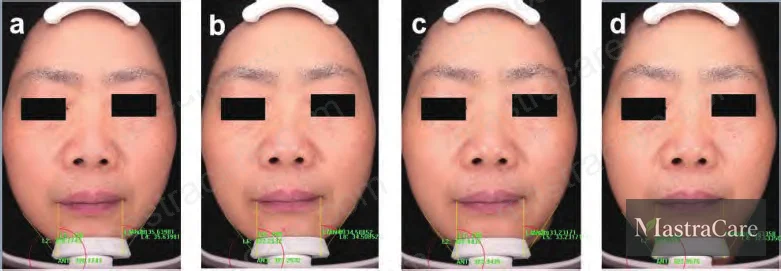
Figure 1: Multi-zone wrinkle area and volume reduction data across cheek, glabellar, under-eye, nasolabial fold, outer canthus, and mouth corner sites after 14, 28, and 56 days of daily use with 0.1% PUR10 cream

PUR10 Botanical-Peptide Mechanism: What the HMGB1 Pathway Actually Means for Formulation Buyers #

The mechanism is worth understanding because it directly informs where PUR10 differentiates from standard antioxidant botanicals or generic peptide blends.

Skin inflammaging — the slow, chronic inflammatory state driving accelerated structural degradation — is substantially mediated by the HMGB1 protein (High Mobility Group Box 1). Under oxidative stress or UV exposure, HMGB1 translocates from the nucleus to the cytoplasm and extracellular space, where it binds TLR4 and activates NF-κB downstream signaling. The result is sustained pro-inflammatory cytokine expression, collagen degradation, and mitochondrial dysfunction in fibroblasts. This is not a niche pathway — it’s central to why sensitive skin ages faster and recovers more poorly from environmental insults.

PUR10 intervenes at two nodes simultaneously. The flavonoid fraction from Prunus spinosa (extracted from plants native to Yunnan’s Haba Snow Mountain region) suppresses HMGB1 nuclear-cytoplasmic translocation at the source — less HMGB1 is released in the first place. ACE-10, a peptide designed around the structural template of a Yunnan forest frog-derived peptide, operates at the cell surface level: it competitively binds HMGB1, blocking its interaction with TLR4/MD-2 receptor complexes and cutting off downstream NF-κB activation. In tested HaCaT cell models, PUR10 demonstrably reduced HMGB1-induced inflammatory cytokine expression and restored mitochondrial membrane potential in H₂O₂-challenged primary human fibroblasts — which translates to improved cellular energy metabolism and enhanced collagen synthesis capacity.

This dual-node approach is what makes the combination more defensible than a single botanical extract with general antioxidant claims. It’s also what justifies the claim architecture around sensitive skin specifically.

Buyers evaluating peptide and growth factor actives will recognize ACE-10’s competitive receptor-binding mechanism as analogous to signal peptide strategies used in Argireline and Syn-Ake analogs — but the target here is an inflammaging pathway, not a neuromuscular junction.

PUR10 Clinical Performance Data: Daily Use vs. Post-Procedure Comparison #

The study enrolled two independent cohorts under controlled conditions: a daily-use group (34 volunteers, ages 42–60, mean age 52.76 ± 5.23 years) and a post-Fotona 4D group (27 volunteers, ages 20–58, mean age 42.96 ± 12.31 years). All assessments were performed in a controlled environment at 21 ± 2°C and 50% ± 10% relative humidity, with volunteers resting 30 minutes before measurement to stabilize skin physiology.

Instrument suite included Cutometer dual MPA 580 (elasticity/firmness via R2 and F4 values), Primos CR (3D wrinkle volume and area), Visia-7 / Visia CR (chin angle, wrinkle count), and DermaLab Combo (skin thickness in μm, skin density in g/cm²). All measurements taken at fixed anatomical landmarks with probes applied perpendicular to the skin surface.

Measurement Parameter Baseline (D0) Day 28 Day 56 Statistical Significance
Skin elasticity R2 value (daily group) 0.61 ± 0.05 0.68 ± 0.03 0.74 ± 0.04 P < 0.05 all timepoints
Skin firmness F4 value (daily group, lower = firmer) 2.99 ± 0.49 2.60 ± 0.32 2.35 ± 0.44 P < 0.05 all timepoints
Chin angle /° (daily group, lower = more defined) 74.61 ± 6.07 71.06 ± 6.03 69.82 ± 5.78 P < 0.05 all timepoints
Cheek wrinkle area /mm² (daily group) 6.80 ± 2.67 4.39 ± 2.19 3.94 ± 2.53 P < 0.05 all timepoints
Cheek wrinkle volume /mm³ (daily group) 0.33 ± 0.18 0.22 ± 0.13 0.20 ± 0.15 P < 0.05 all timepoints
Skin thickness /μm (post-procedure, treatment side) 1358.33 ± 198.51 1422.93 ± 196.41 1451.37 ± 210.02 P < 0.05 vs. control side
Skin density /g·cm⁻² (post-procedure, treatment side) 25.96 ± 5.89 28.64 ± 6.35 29.93 ± 6.43 P < 0.05 vs. control side
Outer canthus wrinkle area /mm² (post-procedure, treatment side) 11.97 ± 4.55 10.70 ± 4.32 9.68 ± 4.14 P < 0.05 vs. control side

The volunteer self-assessment scores (0–9 scale) for wrinkle severity, fine line severity, firmness, and elasticity all showed significant improvement from baseline in both groups at all timepoints (P < 0.05). Self-assessed facial wrinkle severity dropped from a baseline of 6.29 ± 0.76 to 2.50 ± 0.79 at day 56 in the daily-use group — that's a reduction of more than half on the patient-reported scale, which is the kind of number that ends up in brand copy.
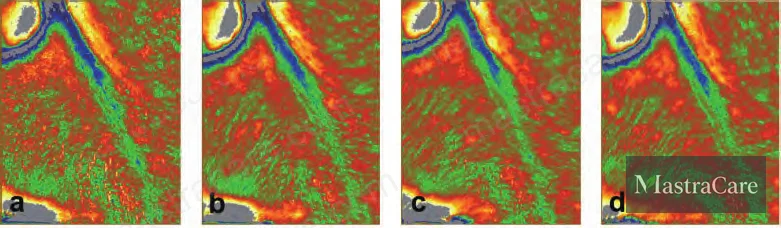
Figure 2: Progressive improvement in chin angle (52-year-old volunteer, D0 to D56) and nasolabial fold depth (49-year-old female volunteer, D0 to D56) with daily application of 0.1% PUR10 cream

Habaflair PUR10 in Post-Procedure Skincare: Evidence from Fotona 4D Laser Protocols #

This is where the data gets particularly interesting from a product positioning standpoint.

The post-procedure cohort used a split-face design — the treatment side received the 0.1% PUR10 cream twice daily for 28 days starting immediately after Fotona 4D treatment; the contralateral control side received a vehicle cream with no actives. Fotona 4D combines 2940 nm Er:YAG and 1064 nm Nd:YAG laser energies to achieve both superficial ablation and deep dermal collagen remodeling. It’s a relevant model because the SupErficial mode uses water-mediated vaporization to enhance active ingredient penetration into deeper skin layers — meaning the post-treatment window is also when topical actives can reach further.

The treatment side outperformed the control side on every measured parameter at both D14 and D28 (all P < 0.05). The safety data from this cohort is arguably more clinically relevant than the efficacy data: within 15 minutes of post-procedure application, the PUR10 side already showed statistically superior scores for skin overall condition, tolerance to external stimuli, itch, stinging, and burning sensation compared to the vehicle side. By D3, the divergence was clear across all five safety dimensions. Zero adverse reactions were recorded on either side throughout the study.

This is not a trivial claim. Post-laser skin is compromised and reactive, and a product that demonstrably reduces discomfort within 15 minutes of application — in a population selected for sensitive skin (all volunteers had Fitzpatrick III–IV skin types) — has real clinical differentiation value.

Honestly, most buyers evaluating post-procedure actives focus exclusively on soothing agents like panthenol or centella derivatives. The PUR10 data suggests you can run a concurrent anti-aging claim at the same time without sacrificing tolerability. That dual utility — recovery support plus structural improvement — is a harder combination to substantiate with single-mechanism ingredients.

For buyers building anti-aging product lines that bridge professional treatment and home care, this is worth examining closely.
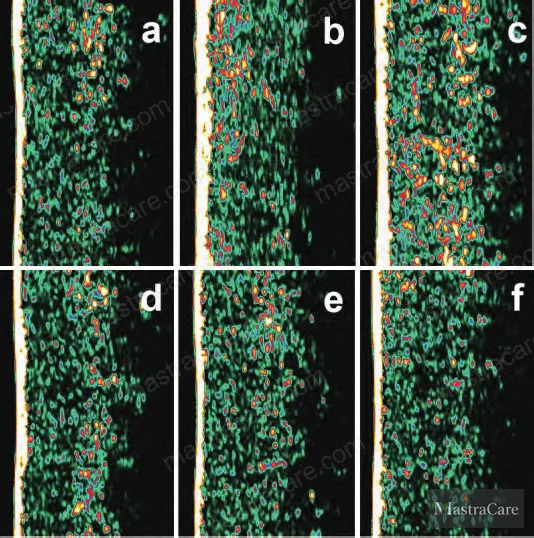
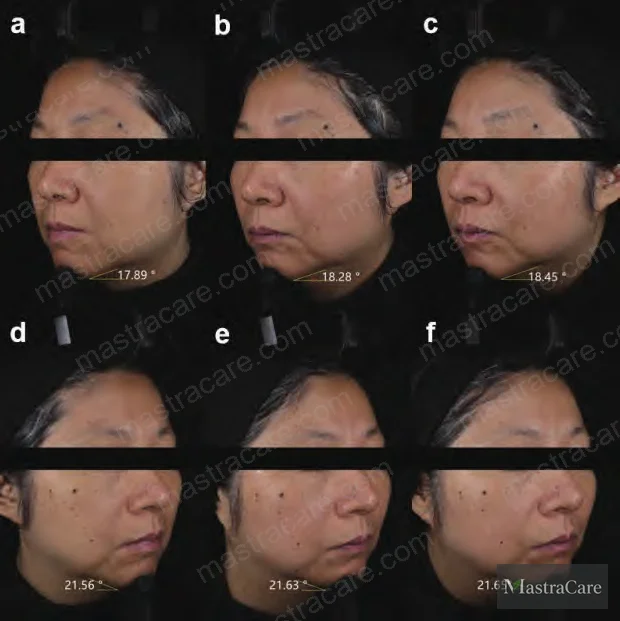
Figure 3: Skin thickness and density improvement images for 37-year-old volunteer at D0, D14, and D28 — treatment side vs. control side comparison using DermaLab Combo measurement
Figure 4: Mandibular angle improvement in 49-year-old volunteer — treatment side (D0, D14, D28) vs. control side, demonstrating superior jawline definition with 0.1% PUR10 cream

Safety Profile, Study Design Integrity, and Supplier Qualification Considerations #

The safety evaluation used a 0–9 self-assessment scale across five dimensions: overall skin condition, tolerance to external stimuli, itching, stinging, and burning. In the daily-use group of 34 volunteers with confirmed sensitive skin (Fitzpatrick II–IV), all five safety parameters improved significantly from baseline at D14, D28, and D56 (P < 0.05). Zero adverse reactions — local or systemic — were recorded over the full 56-day period.

That result is cleaner than what we typically see. In supplier qualification work, we’ve evaluated comparable botanical-peptide complex claims where three out of six sample batches triggered measurable erythema scores in sensitive-skin panels — typically tracing back to residual solvent content in the botanical extract fraction or inadequate peptide purity. The zero-adverse-event result here is contingent on the specific manufacturing source and batch quality of the Prunus spinosa extract. When sourcing this active, verify the extraction specification: solvent system, flavonoid content standardization, and residual solvent limits per EU Cosmetics Regulation (EC) No 1223/2009 Annex requirements.

The studies were conducted under ethics approvals from SGS Clinical Research Ethics Committee (No. SS-2024-064) and the QDMED ethics committee (No. QDMED-WI-011-R03-1), both in compliance with the Declaration of Helsinki. Statistical analysis was performed using SPSS 28.0 with Shapiro-Wilk normality testing, t-tests for normally distributed data, and Wilcoxon rank-sum tests for non-normal distributions. The bar for statistical significance was P < 0.05.

Most procurement teams don’t realize that efficacy claim substantiation requirements differ substantially between markets. The EU’s ISO 29621 and the US FDA voluntary cosmetic claims guidance operate on different evidentiary frameworks, while markets like Japan require compliance with JSCC (Japan Society of Cosmetic Chemists) testing norms. A study run under Chinese SGS ethics review is scientifically valid, but you may need to supplement it with local-market substantiation documents before making certain on-pack claims in regulated markets. Build that cost into your development timeline.

The acknowledged study limitations are worth flagging for buyers running due diligence: both cohorts were single-center, approximately 30 subjects each, limited to sensitive skin types, with follow-up periods of 8 weeks (daily) and 4 weeks (post-procedure). Long-term durability data and healthy-skin vs. sensitive-skin comparative data are not yet available. That’s not a disqualifying gap, but it is a real gap.

For ingredient-level specification review, buyers should also reference ISO 16128 for natural and organic cosmetic ingredient definitions, which is increasingly relevant when positioning Yunnan-origin botanical extracts in clean-beauty commercial channels.


Practical Guidance for Buyers #

PUR10 at 0.1% finished-formula concentration is positioned for a specific brief: a premium anti-aging cream targeting the 40+ segment with sensitive skin, where you need multi-dimensional clinical evidence and a plausible mechanism story for professional or medically-adjacent retail channels. At that concentration, it is cost-manageable in a mid-to-premium cream matrix without requiring significant reformulation work.

If your brief also covers post-procedure or clinic-adjacent skincare — recovery creams used after laser, RF, or microneedling treatments — the split-face data from the Fotona 4D cohort gives you substantiation that most competing actives simply don’t have at this specificity.

When initiating development around this active, your first technical question should be about the flavonoid standardization spec on the Prunus spinosa extract. Batch-to-batch consistency is where botanical actives fail most often in scale-up, and HMGB1-pathway activity is directly tied to the flavonoid fraction’s concentration and profile.

Our team at MastraCare — a Guangzhou-based OEM/ODM formulation and manufacturing partner for international personal care and cosmetics brands — works with Yunnan-origin botanical extract systems including PUR10-type active combinations, and can support buyers in translating this kind of clinical data into a manufacturable, compliant product concept. If you’re evaluating this ingredient for a current brief, we’re a practical starting point for sample formulations and RFQ feasibility review.

Published by mastracare.com Technical Team | Request a sourcing quote


Frequently Asked Questions #

What is Habaflair PUR10, and how is it different from a standard botanical extract?

PUR10 is a binary active system combining Prunus spinosa (Yunnan wild apricot) total flavonoid extract with ACE-10, a synthetic decapeptide (Decapeptide-4) designed to competitively inhibit HMGB1 receptor binding. The distinction matters because the flavonoid fraction alone has general antioxidant activity, but the combination creates a two-node intervention on the HMGB1 inflammaging pathway — one working intracellularly to suppress translocation, one working extracellularly to block receptor engagement. That mechanistic specificity is what separates it from a bulk botanical extract with broad antioxidant claims.

What use level is supported by the clinical data?

The published clinical work was conducted at 0.1% in a finished cream matrix, applied twice daily. Both the 56-day daily-use data and the 28-day post-procedure data were generated at this concentration. There is no published dose-ranging data in the public domain, so buyers should not assume proportional performance at higher or lower concentrations without independent testing.

Can this ingredient be used in post-procedure products for clinical or professional skincare channels?

The split-face controlled data from the Fotona 4D laser cohort provides meaningful substantiation for post-procedure positioning. The 15-minute timepoint safety data — showing statistically superior tolerance scores compared to vehicle control immediately after laser treatment — is particularly relevant for clinic-facing SKUs. That said, any on-pack claims in clinical or professional retail channels will require claims compliance review under your specific target market’s regulatory framework.

Is the Prunus spinosa extract origin-specific, and does that matter for sourcing?

The extract used in published studies derives from plants cultivated in Yunnan’s Haba Snow Mountain region, and the flavonoid profile and activity data are referenced to that specific botanical source. Substituting a Prunus spinosa or general Prunus spinosus extract from other origins without verifying flavonoid composition equivalence is a real qualification risk. Confirm the INCI designation (Prunus spinosa seed extract) and the standardized flavonoid content specification before signing off on a supplier.

What compliance documentation should buyers request alongside the clinical data?

At minimum: the full clinical study report (not just the published abstract), certificate of analysis with flavonoid standardization values, residual solvent test data for the botanical extract, safety data sheet, and INCI declaration confirmation. For EU-market products, verify compliance with EU Cosmetics Regulation (EC) No 1223/2009. For natural/organic channel positioning, request the ISO 16128 natural origin index calculation.

Content reviewed by nina.huang | © mastracare.com — All rights reserved. Unauthorized reproduction prohibited.

更新 2026年6月19日

您的感觉是什么

  • Happy
  • 常规
  • Sad

分享这篇文章 :

  • Facebook
  • X
  • LinkedIn
  • Pinterest
Quercetin, Kaempferol, and β-Sitosterol: Formulating a TCM-Derived Anti-Aging Cream with Verified Antioxidant ActivityJuniperus Chinensis Seed Extract in Antioxidant Moisturizing Cream: Formulation Data and Buyer Evaluation Guide

发表回复取消回复

您的邮箱地址不会被公开。 必填项已用 * 标注

内容目录
  • TL;DR
  • PUR10 Botanical-Peptide Mechanism: What the HMGB1 Pathway Actually Means for Formulation Buyers
    • PUR10 Clinical Performance Data: Daily Use vs. Post-Procedure Comparison
  • Habaflair PUR10 in Post-Procedure Skincare: Evidence from Fotona 4D Laser Protocols
  • Safety Profile, Study Design Integrity, and Supplier Qualification Considerations
  • Practical Guidance for Buyers
  • Frequently Asked Questions
Mastra Care · Since 2007 · Premium Beauty & Personal Care OEM Manufacturer, China.
Knowledge BaseProductsAboutContactPrivacy Policy
© 2007 – 2026 Mastra Beauty & Personal Care