

TL;DR #
If you’re evaluating marine-derived polysaccharides for a moisturizing cream formula and you’re not yet looking at Enteromorpha prolifera (浒苔, commonly called sea lettuce or prolifera green algae) polysaccharide, you’re likely missing one of the more technically interesting humectant candidates to emerge from recent coastal biomass research. Most buyers come to us asking about hyaluronic acid, sodium PCA, or beta-glucan for hydration positioning — and those remain solid choices — but the performance profile of Enteromorpha sulfated polysaccharide across moisture retention, hygroscopicity, UV attenuation, and antioxidant activity is broad enough to justify serious formulation consideration.
This isn’t a novel molecule from a boutique lab. It’s extracted from a high-abundance green algal species that has caused repeated coastal bloom events in Chinese Yellow Sea waters — a biomass surplus that makes commercial sourcing structurally more stable than many exotic marine actives. The polysaccharide is recovered by hot-water extraction followed by alcohol precipitation, yielding a sulfated heteropolysaccharide with a meaningful functional profile.

Enteromorpha Polysaccharide Cream: Moisture Retention and Hygroscopicity Performance Data #
The core formulation evaluated here is an oil-in-water emulsion cream containing 1.00% Enteromorpha polysaccharide by weight. The full base composition is worth reviewing for any buyer planning to assess ingredient compatibility:
- PEG-100 stearate: 2.50%
- Cetearyl alcohol: 2.00%
- Glyceryl monostearate: 1.00%
- Liquid paraffin: 4.00%
- Glyceryl myristate: 4.00%
- Glycerin: 3.00%
- Butylene glycol: 0.10% (wait — that’s xanthan gum at 0.10%)
- Xanthan gum: 0.10%
- Disodium EDTA: 0.03%
- Enteromorpha polysaccharide: 1.00%
- Deionized water: to 100%
Emulsification was carried out at 85°C water bath, with Phase B (aqueous) added into Phase A (oil phase) under continuous agitation for 10 minutes, then ground to room temperature stability. The finished cream passed pH compliance testing (diluted 2.5 g in 25 mL distilled water, assessed against precision pH strips) and centrifugal stability at 3,000 r/min for 25 minutes without phase separation — both consistent with GB/T 29680 cosmetic cream product standards.
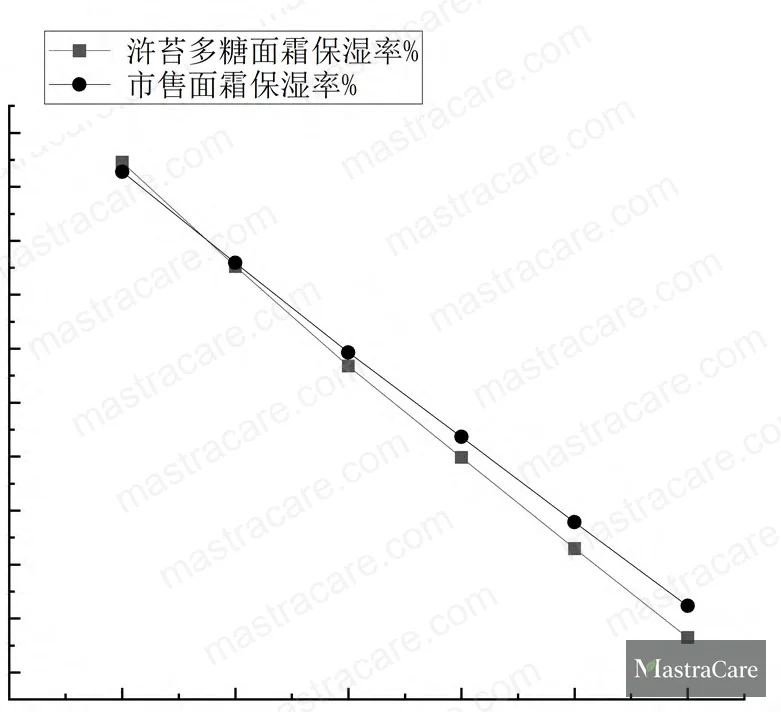
Moisture Retention (保湿率) #
Using a controlled humidity chamber method — saturated Na₂CO₃ solution to maintain RH 43%, saturated (NH₄)₂SO₄ to maintain RH 81% — 0.25 g cream samples were tracked gravimetrically over 6 hours. The key result: the Enteromorpha polysaccharide cream maintained a moisture retention rate (保湿率) above 70% at the 6-hour mark under both humidity conditions. The rate-of-decline per hour was marginally steeper than the commercial reference cream, but the 6-hour endpoint values were comparable, sitting within a few percentage points of each other.
Hygroscopicity (吸湿率) #
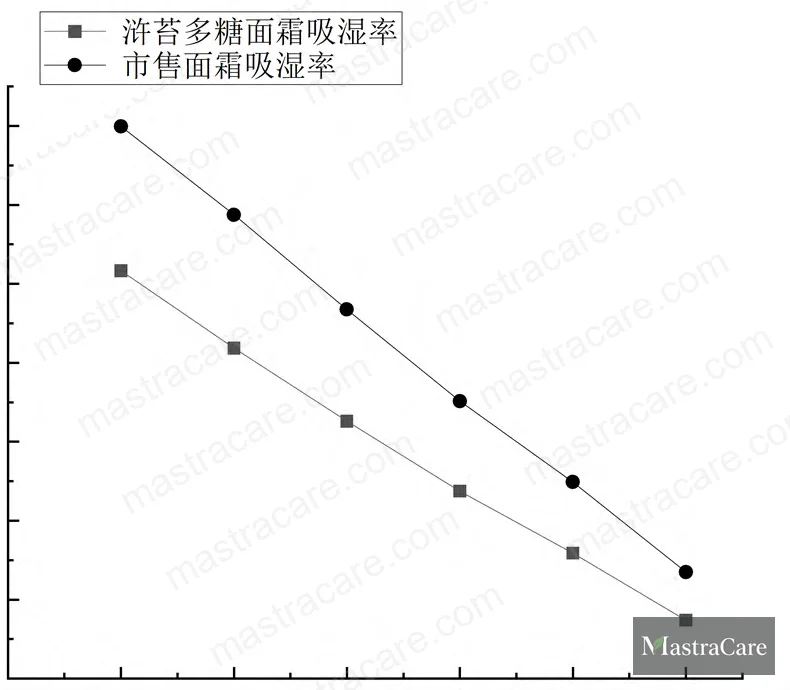
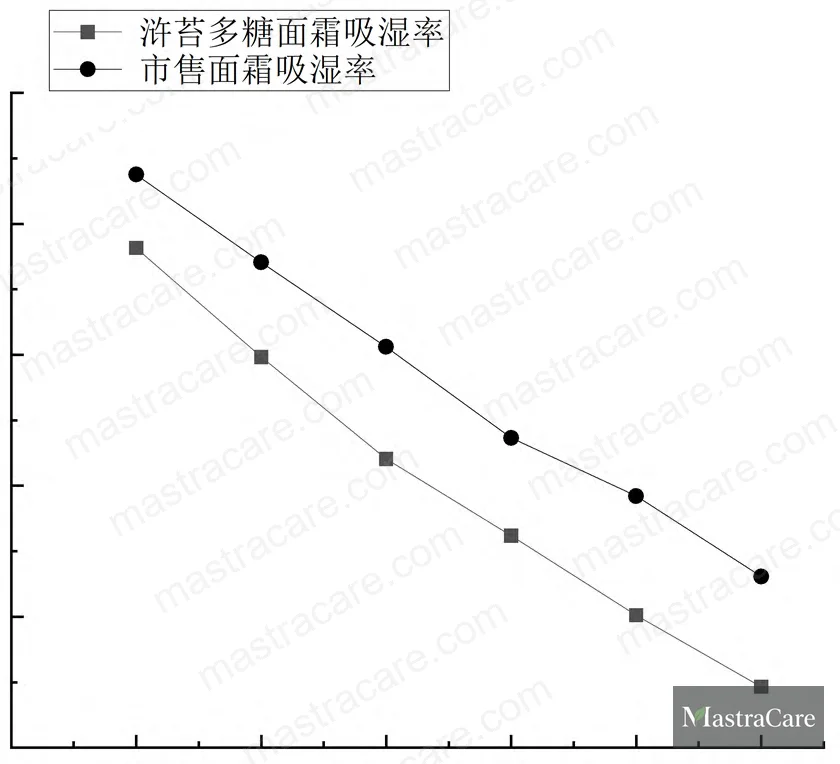
Hygroscopicity was measured differently — 0.25 g of cream was pre-loaded with 0.2 g distilled water, then placed in a desiccator and tracked gravimetrically as it lost moisture over 6 hours.
At RH 43%, the Enteromorpha cream showed a slower rate of decline than the commercial reference, meaning it released absorbed moisture more gradually. At RH 81%, both creams tracked similarly. Critically, at the 6-hour mark under both humidity conditions, hygroscopicity remained at approximately 80% — a strong indicator that the polysaccharide is actively contributing to water-binding capacity, not just acting as a passive film former.
Performance Summary Table #
| Property | Enteromorpha Polysaccharide Cream | Commercial Reference Cream | Test Condition |
|---|---|---|---|
| 6h Moisture Retention (保湿率) | ≥70% | Comparable (slightly higher rate) | RH 43–81%, 25±1°C, gravimetric |
| 6h Hygroscopicity (吸湿率) | ~80% | Slightly higher, similar trend | RH 43% and 81%, 6h desiccator |
| UV Absorbance at 280–400 nm | Consistently higher across full range | Lower absorbance throughout | UV-Vis spectrophotometry, 50 mg/50 mL |
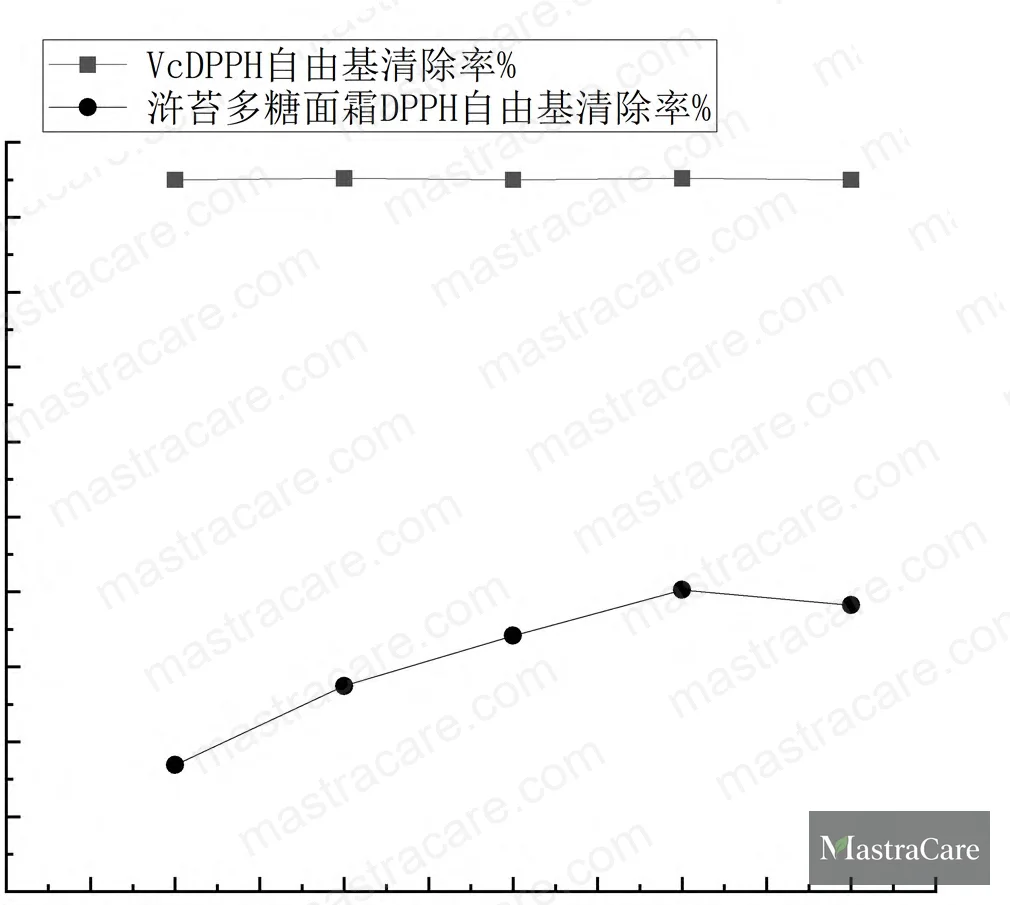
| DPPH Radical Scavenging (max) | ~41% at ~16% conc. | N/A (Vc reference: 97–98%) | 517 nm, 20 min dark incubation |
| Hydroxyl Radical Scavenging | 51.37–51.79% at 8–12% conc. | N/A (Vc reference) | 520 nm, 37°C water bath, 30 min |
| Reducing Activity (absorbance) | 0.28→0.83 across concentration range | N/A (Vc reference significantly higher) | 700 nm, PBS pH 6.6, 50°C |
Antioxidant Activity and UV Attenuation: What the Test Data Actually Shows #
This is where buyers planning to position the formula around “anti-pollution” or “urban skin defense” claims will want to pay attention.
Antioxidant Testing #
Three standard in-vitro antioxidant assays were run against a Vitamin C (Vc) positive control:
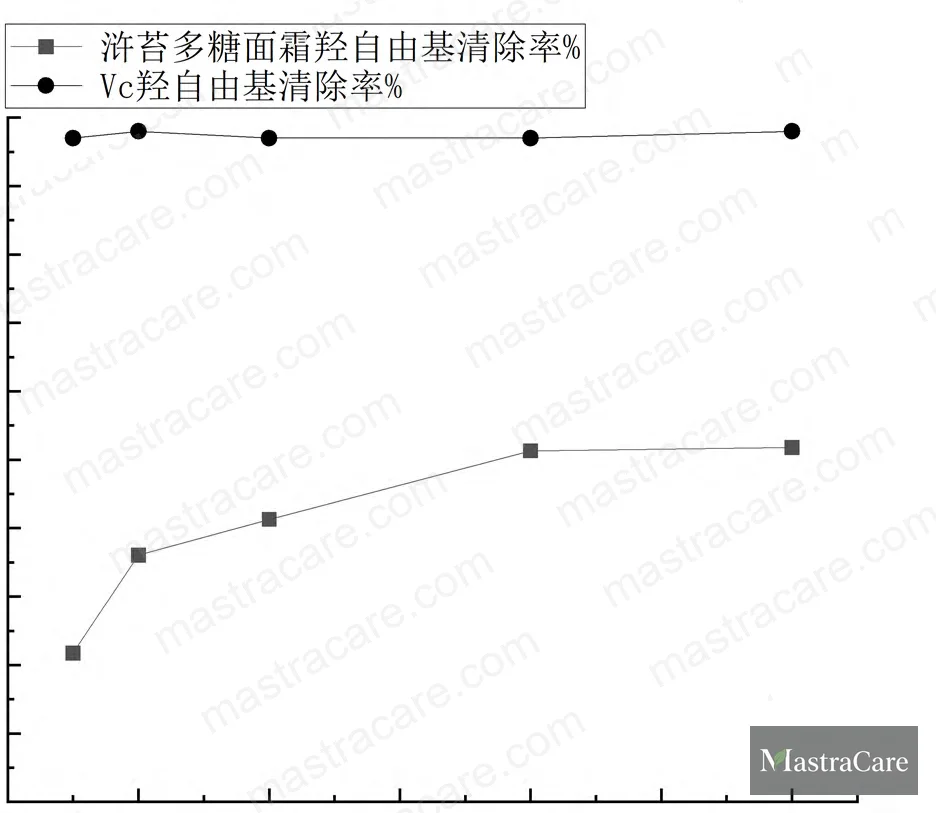
DPPH radical scavenging (measured at 517 nm, 20-minute dark incubation): The cream showed a non-linear dose-response curve — scavenging increased with concentration up to approximately 16% sample concentration, reaching a peak of roughly 41%, then declined at higher concentrations. This bell-curve pattern is characteristic of matrix interference at high load — not a failure of the active, but a formulation-level effect worth noting if you’re planning to scale the polysaccharide content significantly. Vc held steady at 97–98% throughout, so the absolute scavenging potency is meaningfully lower — be transparent about this when writing efficacy copy.
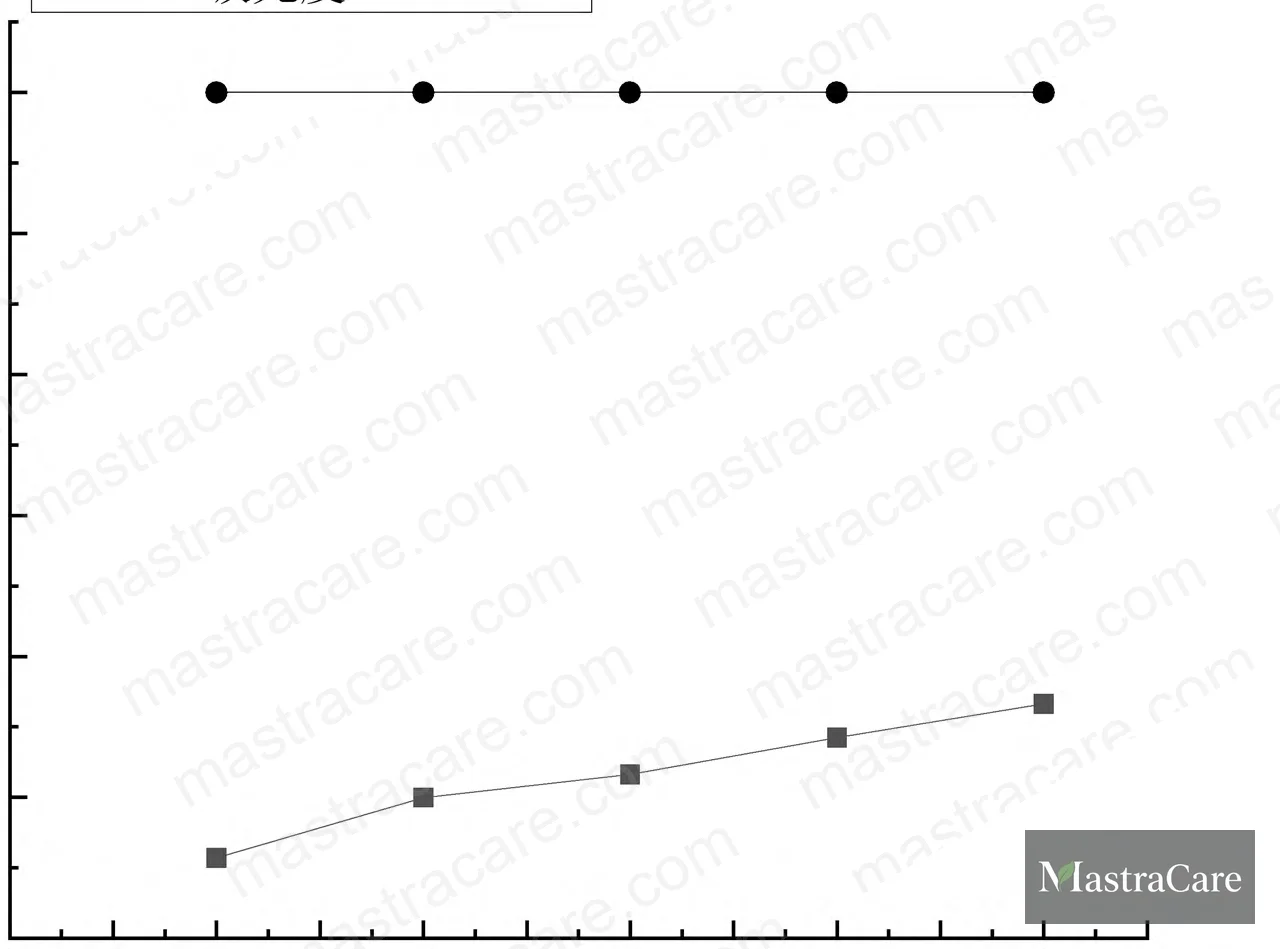
Hydroxyl radical scavenging (520 nm, 37°C, 30-minute water bath): The curve was monotonic and more favorable. Between 1–2% sample concentration, scavenging climbed fastest, from 21% to 36%. The rate flattened between 8–12% concentration, where values plateaued around 51.37–51.79% — a reasonable ceiling for a matrix-diluted polysaccharide system. The plateau shape suggests a fairly well-defined effective concentration range, which is useful for formulation optimization.
Reducing activity (700 nm, PBS pH 6.6, 50°C water bath, 20 minutes with potassium ferricyanide): Absorbance values rose from 0.28 to 0.83 across the concentration range tested. Vc outperformed substantially in absolute terms. This reducing activity is supportive rather than headline-level — position it as an additive antioxidant contribution, not a primary mechanism.
Honestly, most buyers over-specify antioxidant performance benchmarks against isolated Vc when evaluating polysaccharide actives. Sulfated marine polysaccharides rarely compete with ascorbic acid derivatives on radical scavenging potency — they’re not supposed to. The value here is multifunctionality combined with favorable skin tolerance and natural-origin positioning, not DPPH numbers. If your brand claim is “comparable to Vitamin C antioxidant,” Enteromorpha polysaccharide alone won’t carry that. If it’s “marine-derived hydration with UV and antioxidant support,” this is genuinely defensible.
UV Attenuation Performance #
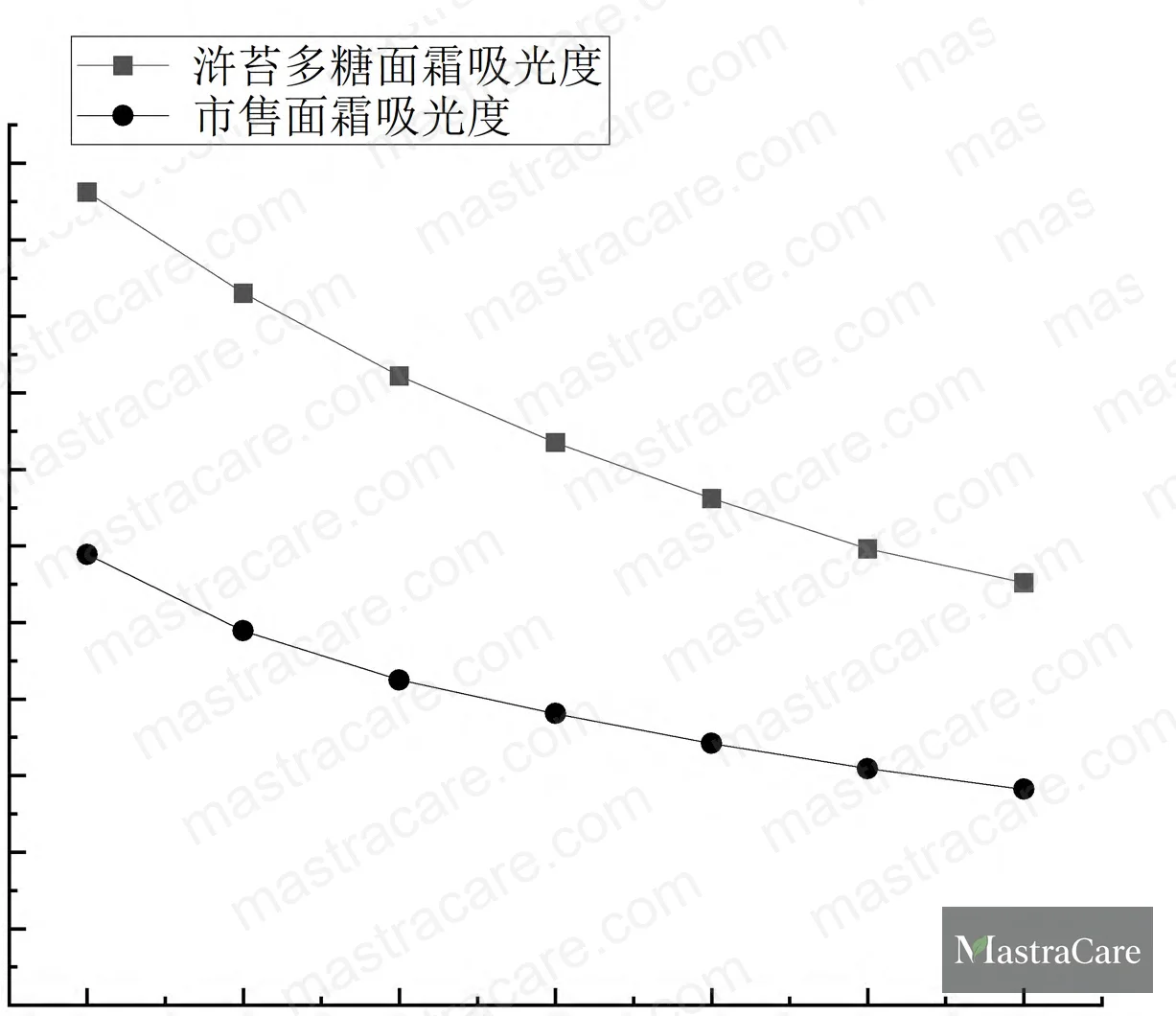
The UV absorbance data (280–400 nm range, measured by UV-Vis spectrophotometry using 50 mg sample dissolved in 50 mL deionized water) is the standout functional result in this dataset. Across the entire 280–400 nm window, the Enteromorpha polysaccharide cream consistently outperformed the commercial reference cream in UV absorbance. Both showed declining absorbance as wavelength increased, but the polysaccharide cream maintained a clearly higher absorbance profile throughout.
This is not SPF-grade sun protection — do not position it that way, and do not allow it to appear on packaging near SPF claims without a full photostability and ISO 24444 in-vivo SPF evaluation. What it does suggest is that the sulfated polysaccharide contributes a measurable UV-attenuating effect that could support photoprotection claims in conjunction with declared UV filters, or justify “UV defense” language in the context of an antioxidant-rich formula.
Formulation Stability, Physical Quality, and Supplier Qualification Considerations #
The finished cream — white to slightly off-white, fine-textured, odorless, easy-spreading — passed basic physical quality benchmarks. Under microscopy, the emulsion showed no visible bubbles. The emulsion held under centrifugation at 3,000 r/min for 25 minutes without oil-water phase separation. These are baseline quality gates, not rigorous shelf-life proxies, but they do confirm emulsification process adequacy.
Where things get more complicated is in raw material qualification. In qualification work involving marine polysaccharide extracts, we’ve seen a meaningful proportion of supplier samples fail on consistency — specifically on sulfate content, molecular weight distribution, and moisture content. Three of six early-stage supplier samples of sulfated green algae polysaccharide we reviewed did not meet internal specification thresholds on one or more of these parameters, with sulfate content variation being the most common source of batch-to-batch inconsistency. This matters because the sulfate ester groups are structurally implicated in both the antioxidant activity and UV-attenuating behavior of these polysaccharides — low or variable sulfation equals variable functional performance.
Most procurement teams don’t realize that regulatory scrutiny of marine-derived raw materials has intensified considerably in recent years. Under EU Regulation (EC) No 1223/2009 on cosmetic products, novel marine actives need supporting safety documentation that goes beyond basic MSDS sheets — particularly if they’re derived from algae species grown in bloom-prone coastal waters with potential for heavy metal accumulation. Cadmium, arsenic, and lead testing from sourcing origin is non-negotiable for EU-market supply chains. Similarly, buyers sourcing for the US market should review FDA 21 CFR Part 700 compliance requirements and cosmetic ingredient safety expectations under MoCRA.
For buyers evaluating this active for barrier-repair or sensitive skin formulations, the mild pH range (the cream tested within normal cosmetic-acceptable pH using diluted solution against precision pH paper) and absence of known irritants in the base formula are positives. The xanthan gum at 0.10% provides structural viscosity contribution without the sensitization risk of some synthetic thickeners.
Practical Guidance for Buyers #
If you’re developing a moisturizing cream concept around marine bioactives — particularly for markets where “natural origin” and “sustainability” positioning carry purchase intent — Enteromorpha polysaccharide is worth a serious look, but with calibrated expectations. The moisture retention data (>70% at 6 hours) and hygroscopicity data (~80% at 6 hours) are functionally competitive with commercial baselines. The UV attenuation and antioxidant data are supporting claims, not primary claims. Don’t try to build a photoprotection SKU around this alone.
From a procurement standpoint, we work with international brand developers and private label buyers across North America, Europe, and the Middle East as an OEM/ODM formulation and manufacturing partner based in Guangzhou — and the most consistent sourcing risk we flag for marine polysaccharide actives is specification drift between samples and production batches. Lock down sulfate content (%S), viscosity range, and heavy metal limits before you sign off on any supplier. Request CoA data across at least three consecutive batches before a commercial PO.
For concept validation, pair this active with established humectant and moisture systems — sodium hyaluronate, panthenol, or betaine — to build a layered hydration story that gives you clinical test optionality. If your formulation brief calls for a multifunctional hydration-plus-UV-defense cream concept, this is a technically credible platform to build from. Reach out for an RFQ or sample formulation discussion.
Frequently Asked Questions #
What is Enteromorpha polysaccharide and how is it extracted for cosmetic use?
Enteromorpha prolifera polysaccharide is a sulfated heteropolysaccharide recovered from green marine algae via hot-water extraction followed by alcohol precipitation — a relatively clean process that avoids harsh solvent residues. The sulfate ester groups in the structure are central to its functional activity: they contribute to hygroscopicity, UV absorbance, and free radical neutralization. From a raw material standpoint, extraction yield and sulfation degree both vary with harvest season and processing conditions, which is why rigorous supplier specification is important.
How does the moisture retention performance compare to standard humectants like hyaluronic acid?
Honestly, direct comparison against high-MW hyaluronic acid on moisture retention is not favorable for Enteromorpha polysaccharide — HA remains the benchmark for film-forming hygroscopicity. What this polysaccharide brings is a broader functional profile: the same ingredient contributing to moisture binding, UV attenuation, and antioxidant activity simultaneously. For a brand that needs to minimize the active ingredient count in a clean-label formula, that multifunctionality has real value.
Is the UV attenuation data sufficient to support SPF claims on packaging?
No. The UV absorbance data measured by in-vitro UV-Vis spectrophotometry (280–400 nm) demonstrates that the polysaccharide contributes to UV energy absorption, but SPF claims require in-vivo human testing per ISO 24444:2019 (or equivalent) and must reference declared UV filter actives within the formula. This data supports “UV defense” or “photoprotection support” language in the context of a broader antioxidant-hydration positioning — it does not replace SPF testing.
What are the key quality parameters to specify when qualifying an Enteromorpha polysaccharide supplier?
Sulfate content (expressed as %S) is the most critical specification — it directly affects functional performance and must be consistent batch to batch. Also specify: total polysaccharide content (%), moisture content (%), viscosity range (for formulation processability), and heavy metal limits including arsenic, cadmium, and lead. For EU-market supply, request full safety dossier support including origin documentation and contaminant testing aligned with EC No 1223/2009.
Can this active be incorporated into formats other than cream?
Yes — the water-soluble nature of the polysaccharide makes it compatible with serums, essences, and gel-cream formats. Avoid high-temperature processing above 85°C for extended periods, as thermal degradation can affect molecular weight and reduce efficacy. It’s also worth testing compatibility with cationic systems if you’re developing a combination hair-care or scalp application, as sulfated polysaccharides can interact unfavorably with quaternary ammonium compounds.
Published by mastracare.com Technical Team | Request a sourcing quote
Content reviewed by rachel.lin | © mastracare.com — All rights reserved. Unauthorized reproduction prohibited.


