跳至内容
无结果
  • Knowledge Base
  • Products
  • About
  • Contact
MastraCare Biotech
MastraCare Biotech
  • Knowledge Base
  • Products
  • About
  • Contact
MastraCare Biotech
MastraCare Biotech

Retinoid Technology

24
  • HPR (Hydroxypinacolone Retinoate) in Anti-Aging Creams: Efficacy Data, Formulation Parameters, and Supplier Qualification Guide
  • Retinoid Technology — Procurement & Cost Guide
  • Retinoid Technology — Troubleshooting & Failure Guide
  • Retinoid Technology — Regulatory & Compliance Guide
  • Retinoid Technology — Supplier Qualification Guide
  • Retinoid Technology — Application & Performance Guide
  • Retinoid Technology — Material Selection Guide
  • NMPA Special Cosmetic Registration for Retinoid Anti-Aging Claims: Compliance Guide
  • Retinol Encapsulation Technology: Liposome vs SLN vs Cyclodextrin Stability Comparison
  • Retinoid Formulation pH & Emulsion Architecture: Stability Parameters
  • Next-Generation Retinoids: Hydroxypinacolone Retinoate & Granactive Retinoid Data
  • Retinoid Skin Tolerance Protocol: Buffering, Frequency & pH Optimization
  • Retinoid Photostability: UV Degradation Rate & Packaging Protection Requirements
  • Bakuchiol as Plant Retinol Alternative: Clinical Evidence & Concentration Guide
  • Retinol vs Retinal vs Retinoic Acid: Conversion Cascade & OEM Formulation Strategy
  • Retinol vs Retinal vs Retinoic Acid: Conversion Cascade & OEM Formulation Strategy
  • NMPA Special Cosmetic Registration for Retinoid Anti-Aging Claims: Compliance Guide
  • Retinoid Formulation pH & Emulsion Architecture: Stability Parameters
  • Next-Generation Retinoids: Hydroxypinacolone Retinoate & Granactive Retinoid Data
  • Retinoid Skin Tolerance Protocol: Buffering, Frequency & pH Optimization
  • Retinoid Photostability: UV Degradation Rate & Packaging Protection Requirements
  • Retinol Encapsulation Technology: Liposome vs SLN vs Cyclodextrin Stability Comparison
  • Bakuchiol as Plant Retinol Alternative: Clinical Evidence & Concentration Guide
  • Retinol vs Retinal vs Retinoic Acid: Conversion Cascade & OEM Formulation Strategy

Peptide & Growth Factor Systems

22
  • Peptide & Growth Factor Systems — Procurement & Cost Guide
  • Peptide & Growth Factor Systems — Troubleshooting & Failure Guide
  • Peptide & Growth Factor Systems — Supplier Qualification Guide
  • Peptide & Growth Factor Systems — Application & Performance Guide
  • Peptide & Growth Factor Systems — Material Selection Guide
  • Peptide & Growth Factor Systems — Technical Specification Overview
  • Peptide Delivery Systems: Liposome Encapsulation vs Free Peptide Bioavailability
  • Signal Peptides for Collagen Stimulation: Matrixyl 3000 vs Argireline Concentration Data
  • Peptide Combinations & Synergy: Multi-Peptide Formulation Design for Anti-Aging
  • Clinical Evidence for Topical Peptides: Study Design, Sample Size & Measurable Outcomes
  • Peptide Stability in Emulsion Systems: pH Range, Temperature & Incompatibility Data
  • EGF & Growth Factor Technology: Recombinant Human EGF Stability & Regulatory Status
  • Carrier Peptides & Trace Elements: Copper Peptide GHK-Cu Delivery & Skin Remodeling
  • Neurotransmitter-Inhibiting Peptides: Acetyl Hexapeptide-3 Mechanism & Clinical Evidence
  • Clinical Evidence for Topical Peptides: Study Design, Sample Size & Measurable Outcomes
  • Peptide Delivery Systems: Liposome Encapsulation vs Free Peptide Bioavailability
  • Peptide Stability in Emulsion Systems: pH Range, Temperature & Incompatibility Data
  • EGF & Growth Factor Technology: Recombinant Human EGF Stability & Regulatory Status
  • Neurotransmitter-Inhibiting Peptides: Acetyl Hexapeptide-3 Mechanism & Clinical Evidence
  • Signal Peptides for Collagen Stimulation: Matrixyl 3000 vs Argireline Concentration Data
  • Peptide Combinations & Synergy: Multi-Peptide Formulation Design for Anti-Aging
  • Carrier Peptides & Trace Elements: Copper Peptide GHK-Cu Delivery & Skin Remodeling

Microbiome & Probiotic Skincare

19
  • Microbiome & Probiotic Skincare — Application & Performance Guide
  • Microbiome & Probiotic Skincare — Material Selection Guide
  • Microbiome & Probiotic Skincare — Technical Specification Overview
  • Microbiome & Probiotic Skincare — Comparison & Upgrade Guide
  • Microbiome & Probiotic Skincare — Procurement & Cost Guide
  • Microbiome & Probiotic Skincare — Troubleshooting & Failure Guide
  • Microbiome & Probiotic Skincare — Regulatory & Compliance Guide
  • Microbiome-Safe Surfactant Selection: Mildness Index & Barrier Disruption Data
  • Probiotic Stability in Cosmetic Formulation: Live vs Lysate & Storage Conditions
  • Microbiome-Friendly Preservation: Phenoxyethanol Alternatives & Challenge Test Data
  • Postbiotic Lysate & Ferment Actives: Lactobacillus Ferment vs Bifida Lysate Data
  • Microbiome Testing for OEM Brands: 16S rRNA Sequencing & Skin Microbiome Claim Support
  • Clinical Evidence for Microbiome Skincare: Study Design & Measurable Outcomes
  • Prebiotic Skincare Ingredients: Inulin, FOS & Beta-Glucan Concentration Guide
  • Skin Microbiome Biology: Diversity Index, pH & Barrier Function Relationship
  • Prebiotic Skincare Ingredients: Inulin, FOS & Beta-Glucan Concentration Guide
  • Clinical Evidence for Microbiome Skincare: Study Design & Measurable Outcomes
  • Microbiome-Friendly Preservation: Phenoxyethanol Alternatives & Challenge Test Data
  • Skin Microbiome Biology: Diversity Index, pH & Barrier Function Relationship

Vitamin C & Antioxidant Systems

19
  • Vitamin C & Antioxidant Systems — Application & Performance Guide
  • Vitamin C & Antioxidant Systems — Material Selection Guide
  • Vitamin C & Antioxidant Systems — Technical Specification Overview
  • Vitamin C & Antioxidant Systems — Comparison & Upgrade Guide
  • Vitamin C & Antioxidant Systems — Procurement & Cost Guide
  • Vitamin C & Antioxidant Systems — Troubleshooting & Failure Guide
  • Vitamin C & Antioxidant Systems — Regulatory & Compliance Guide
  • Vitamin C & Antioxidant Systems — Supplier Qualification Guide
  • Regulatory Status of Vitamin C Derivatives: EU, US, NMPA Permitted List & Limits
  • Vitamin C for Hyperpigmentation: Tyrosinase Inhibition Mechanism & Efficacy Claims
  • L-Ascorbic Acid at 10–20%: Penetration Enhancement & Skin Brightening Clinical Data
  • Vitamin C Formulation pH & Packaging: Oxidation Prevention & Airless System Selection
  • Polyphenol & Plant Antioxidants: Resveratrol, Quercetin & Green Tea EGCG Data
  • Astaxanthin & Carotenoid Antioxidants: Stability, Concentration & Clinical Evidence
  • Antioxidant Network & Synergy: Vitamin C + E + Ferulic Acid Combination Efficacy
  • Vitamin C Derivative Stability: L-Ascorbic Acid vs AA2G vs APPS Oxidation Rate Data
  • Vitamin C Formulation pH & Packaging: Oxidation Prevention & Airless System Selection
  • Polyphenol & Plant Antioxidants: Resveratrol, Quercetin & Green Tea EGCG Data
  • Polyphenol & Plant Antioxidants: Resveratrol, Quercetin & Green Tea EGCG Data

Mineral & UV Technology

17
  • Mineral & UV Technology — Material Selection Guide
  • Mineral & UV Technology — Technical Specification Overview
  • Mineral & UV Technology — Comparison & Upgrade Guide
  • Mineral & UV Technology — Troubleshooting & Failure Guide
  • Mineral & UV Technology — Regulatory & Compliance Guide
  • Mineral & UV Technology — Supplier Qualification Guide
  • Global Sunscreen Regulatory Compliance: EU, US OTC Monograph, NMPA & Japan JCIA — Ingredient Selection Guide
  • SPF & PA+++ Testing: ISO 24444 In Vivo vs In Vitro Method & Critical Wavelength
  • Tinted Mineral SPF Formulation: Iron Oxide Blending & Shade Range Development
  • Water Resistance Testing: FDA 40/80 Minute Protocol & Claim Substantiation
  • Mineral Sunscreen Formulation: Regulatory Compliance Across EU, US & China
  • Organic UV Filter Systems: Avobenzone Photostability & Photostabilizer Combinations
  • Titanium Dioxide & Hybrid UV Filters: Photocatalytic Activity & Surface Coating Solutions
  • Zinc Oxide Particle Science: Nano vs Micro ZnO SPF Performance & White Cast Data
  • Water Resistance Testing: FDA 40/80 Minute Protocol & Claim Substantiation
  • Organic UV Filter Systems: Avobenzone Photostability & Photostabilizer Combinations
  • Titanium Dioxide & Hybrid UV Filters: Photocatalytic Activity & Surface Coating Solutions

Botanical & Adaptogen Actives

25
  • Quercetin, Kaempferol, and β-Sitosterol: Formulating a TCM-Derived Anti-Aging Cream with Verified Antioxidant Activity
  • Habaflair PUR10: Clinical Evidence for Botanical-Peptide Anti-Aging Actives in Daily and Post-Procedure Skincare
  • Juniperus Chinensis Seed Extract in Antioxidant Moisturizing Cream: Formulation Data and Buyer Evaluation Guide
  • Inonotus obliquus and Gastrodia elata Polysaccharide Antioxidant Cream: Formulation Data and Procurement Guide
  • Phycocyanin in Cream Formulation: Antioxidant Performance, Moisture Data, and Buyer Qualification Guide
  • Phycocyanin from Spirulina: Purity Grading, Radical Scavenging Data, and Formulation Guide for Antioxidant Creams
  • Formulation Brief & Sample Request Guide for Botanical & Adaptogen Actives
  • Cosmetic Standards & Regulations Explained for Botanical & Adaptogen Actives
  • Regulatory & Safety Documentation Guide for Botanical & Adaptogen Actives
  • How to Choose Botanical & Adaptogen Actives Formulations
  • Botanical & Adaptogen Actives — Technical Specification Overview
  • Botanical & Adaptogen Actives — Procurement & Cost Guide
  • Botanical & Adaptogen Actives — Troubleshooting & Failure Guide
  • Botanical & Adaptogen Actives — Supplier Qualification Guide
  • Botanical & Adaptogen Actives — Application & Performance Guide
  • Sustainable Sourcing & Traceability for Botanical Actives: COA & Heavy Metal Limits
  • Adaptogen Skin Stress Response: Cortisol Modulation & Clinical Study Design
  • Botanical Extract Standardization: HPLC Marker Compound & COA Requirements
  • TCM-Inspired Cosmetic Actives: Angelica, Peony & Pearl Powder Standardization
  • Green Tea & Polyphenol Botanicals: EGCG Stability & Antioxidant Capacity Data
  • Ginseng & Adaptogen Actives: Ginsenoside Profile & Anti-Aging Clinical Evidence
  • Licorice Root & Whitening Botanicals: Glabridin Concentration & Tyrosinase Inhibition
  • Centella Asiatica & Wound Healing Botanicals: Madecassoside vs Asiaticoside Data
  • Botanical Extract Standardization: HPLC Marker Compound & COA Requirements
  • Centella Asiatica & Wound Healing Botanicals: Madecassoside vs Asiaticoside Data

Waterless & Concentrated Formulation

13
  • Waterless & Concentrated Formulation — Procurement & Cost Guide
  • Waterless & Concentrated Formulation — Troubleshooting & Failure Guide
  • Waterless & Concentrated Formulation — Supplier Qualification Guide
  • Waterless & Concentrated Formulation — Application & Performance Guide
  • Waterless & Concentrated Formulation — Technical Specification Overview
  • Consumer Perception of Waterless Formats: Texture Expectation & Education Strategy
  • Sustainability Positioning for Waterless Skincare: Carbon Footprint & Claim Support
  • Packaging for Waterless Products: Airless, Stick & Refillable Format Compatibility
  • Preservative-Free Waterless Formulation: Water Activity & Microbial Risk Assessment
  • Oil-to-Milk Cleansing Science: HLB Value & Phase Inversion Emulsification
  • Concentrated Actives Delivery: Waterless Serum Actives Loading & Penetration Data
  • Solid Skincare Technology: Wax Matrix Selection & Melting Point Stability Data
  • Anhydrous & Oil-Based Formulation: Emollient Selection & Skin Feel Engineering

Anti-Aging

29
  • Formulation Brief & Sample Request Guide for Anti-Aging
  • Cosmetic Standards & Regulations Explained for Anti-Aging
  • Anti-Aging — Industry Case Study
  • Anti-Aging — Safety & Risk Assessment
  • Anti-Aging — Design Engineering Reference
  • Anti-Aging — Lifecycle & Maintenance Guide
  • Anti-Aging — Testing & Validation Protocol
  • Anti-Aging — Storage & Handling Guide
  • Anti-Aging — Installation & Integration Guide
  • Anti-Aging — Supplier Qualification Guide
  • Anti-Aging — Application & Performance Guide
  • Anti-Aging — Material Selection Guide
  • Anti-Aging — Technical Specification Overview
  • Anti-Aging — Comparison & Upgrade Guide
  • Anti-Aging — Procurement & Cost Guide
  • Anti-Aging — Troubleshooting & Failure Guide
  • Anti-Aging — Regulatory & Compliance Guide
  • Anti-Aging: Cost Optimization Guide
  • Anti-Aging Formulation Troubleshooting Guide: 5 Failure Modes and How to Fix Them
  • Anti-Aging Market Positioning Guide: Claims, Actives & OEM Capabilities
  • Anti-Aging Supplier Qualification Guide: Factory Audit, COA Review & Incoming QC
  • Anti-Aging Product Stability: Labile Active Protection & Accelerated Testing Protocol
  • Anti-Aging Claim Substantiation: EU, US & NMPA Permissible Claim Language Guide
  • Premium vs Mass Anti-Aging Formulation: Development Tier Comparison & Cost Structure
  • Anti-Aging Ingredient Hierarchy: Proven Actives vs Trending Ingredients — Regulatory Compliance Guide (EU, US, China)
  • Neck & Body Anti-Aging: Firming Active Selection & Large Surface Area Formulation
  • Eye Anti-Aging & Dark Circle Treatment: Caffeine, Peptide & Retinol Eye-Area Protocol
  • Peptide Firming Cream: Multi-Peptide Combination & Clinical Claim Substantiation
  • Retinol Anti-Aging Serum Development: Active Loading, pH & Encapsulation Strategy

Brightening & Whitening

20
  • Whitening Cream for Sensitive Skin: Clinical Efficacy Data on Brightening and Barrier Repair with a Five-Active System
  • Formulation Brief & Sample Request Guide for Brightening & Whitening
  • Cosmetic Standards & Regulations Explained for Brightening & Whitening
  • Brightening & Whitening — Material Selection Guide
  • Brightening & Whitening — Technical Specification Overview
  • Brightening & Whitening — Comparison & Upgrade Guide
  • Brightening & Whitening — Procurement & Cost Guide
  • Brightening & Whitening — Regulatory & Compliance Guide
  • Brightening & Whitening — Supplier Qualification Guide
  • Brightening & Whitening — Application & Performance Guide
  • Brightening & Whitening: Troubleshooting Guide
  • Brightening & Whitening: Market Positioning Guide
  • Clinical Study Design for Brightening Claims: ITA Angle, Mexameter & Photography Protocol
  • Combination Brightening Strategy: Melanin Synthesis + Transfer + Exfoliation Approach
  • Brightening Claim Compliance: EU Restricted List, NMPA Whitening Cosmetic Regulation
  • Tyrosinase Inhibition Actives: Alpha-Arbutin vs Kojic Acid vs Tranexamic Acid Data
  • Body Brightening & Hyperpigmentation: Large-Area Application & Active Penetration
  • Brightening Mask & Spot Treatment: High-Concentration Active Delivery & Contact Time
  • Niacinamide & Multi-Active Brightening: Concentration, Compatibility & Clinical Data
  • Vitamin C Brightening Serum: L-Ascorbic Acid vs Derivative Selection & pH Strategy

Acne & Blemish Control

29
  • Formulation Brief & Sample Request Guide for Acne & Blemish Control
  • Cosmetic Standards & Regulations Explained for Acne & Blemish Control
  • Acne & Blemish Control — Troubleshooting & Failure Guide
  • Acne & Blemish Control — Industry Case Study
  • Acne & Blemish Control — Safety & Risk Assessment
  • Acne & Blemish Control — Design Engineering Reference
  • Acne & Blemish Control — Lifecycle & Maintenance Guide
  • Acne & Blemish Control — Testing & Validation Protocol
  • Acne & Blemish Control — Storage & Handling Guide
  • Acne & Blemish Control — Installation & Integration Guide
  • Acne & Blemish Control — Troubleshooting & Failure Guide
  • Acne & Blemish Control — Application & Performance Guide
  • Acne & Blemish Control — Material Selection Guide
  • Acne & Blemish Control — Technical Specification Overview
  • Acne & Blemish Control — Comparison & Upgrade Guide
  • Acne & Blemish Control — Procurement & Cost Guide
  • Acne & Blemish Control — Regulatory & Compliance Guide
  • Acne & Blemish Control: Market Positioning Guide
  • Acne & Blemish Control: Cost Optimization Guide
  • Acne & Blemish Control: Troubleshooting Guide
  • Acne & Blemish Control: Supplier Qualification Guide
  • Post-Acne Hyperpigmentation Treatment: Brightening + Barrier Repair Combined Strategy
  • Regulatory Status of Acne Actives: US FDA OTC Drug Monograph & EU Cosmetic Limits
  • Acne-Safe Formulation Principles: Non-Comedogenic Rating & Comedogenicity Testing
  • Anti-C. acnes Actives: Benzoyl Peroxide vs Azelaic Acid vs Tea Tree Clinical Evidence
  • Anti-Acne Cleanser Formulation: Surfactant Mildness & Antibacterial Active Selection
  • Acne Spot Treatment & Patch: Salicylic Acid, Benzoyl Peroxide & Hydrocolloid Specs
  • Sebum Control & Pore Minimizing Moisturizer: Niacinamide, Zinc & Mattifying Agent Data
  • BHA Acne Serum & Exfoliating Toner: Salicylic Acid 0.5–2% Formulation Guide

Barrier Repair & Sensitive Skin

23
  • Centella Asiatica, Ceramide NP, and Panthenol for Post-Laser Barrier Repair: Split-Face RCT Data Evaluated
  • Formulation Brief & Sample Request Guide for Barrier Repair & Sensitive Skin
  • Cosmetic Standards & Regulations Explained for Barrier Repair & Sensitive Skin
  • Barrier Repair & Sensitive Skin — Storage & Handling Guide
  • Barrier Repair & Sensitive Skin — Troubleshooting & Failure Guide
  • Barrier Repair & Sensitive Skin — Regulatory & Compliance Guide
  • Barrier Repair & Sensitive Skin — Application & Performance Guide
  • Barrier Repair & Sensitive Skin — Material Selection Guide
  • Barrier Repair & Sensitive Skin — Technical Specification Overview
  • Barrier Repair & Sensitive Skin — Comparison & Upgrade Guide
  • Barrier Repair & Sensitive Skin — Procurement & Cost Guide
  • Barrier Repair & Sensitive Skin: Cost Optimization Guide
  • Barrier Repair & Sensitive Skin: Supplier Qualification Guide
  • Barrier Repair & Sensitive Skin: Troubleshooting Guide
  • Barrier Repair & Sensitive Skin: Market Positioning Guide
  • Regulatory Considerations for Sensitive Skin Products: EU, FDA & NMPA Framework
  • Sensitive Skin Claim Substantiation: Dermatologist-Tested & Hypoallergenic Evidence
  • Microbiome-Friendly Barrier Formulation: Preservative Selection & pH Optimization
  • Skin Barrier Testing: TEWL Measurement, Corneometer & Clinical Improvement Data
  • Eczema-Adjacent & Dry Skin Relief: Occlusive, Humectant & Emollient Layering Strategy
  • Hypoallergenic & Fragrance-Free Formulation: Allergen-Free Ingredient Selection & Patch Test Protocol
  • Soothing & Anti-Redness Treatment: Centella Asiatica, Bisabolol & Allantoin Data
  • Ceramide Barrier Repair Moisturizer: Ceramide 1/3/6-II Ratio & Lipid Matrix Formulation

Sun Protection & Antioxidant Defense

13
  • Sun Protection & Antioxidant Defense — Procurement & Cost Guide
  • Sun Protection & Antioxidant Defense — Troubleshooting & Failure Guide
  • Sun Protection & Antioxidant Defense — Application & Performance Guide
  • Sun Protection & Antioxidant Defense — Material Selection Guide
  • SPF in Moisturizer: Emulsion Architecture Compatibility & Sun Filter Stability
  • Antioxidant + SPF Combination Claims: Evidence Base & Permissible Claim Language
  • Global SPF Regulatory Compliance: EU, FDA OTC Monograph, NMPA & Japan JCIA Guide
  • Water-Resistant Sunscreen: Film Former Selection & FDA 40/80 Minute Test Protocol
  • SPF in Moisturizer: Emulsion Architecture Compatibility & Sun Filter Stability
  • Broad-Spectrum SPF Formulation: Critical Wavelength, UVA-PF & PA+++ Rating Guide
  • After-Sun & Skin Recovery: Soothing Actives, Hydration & DNA Repair Ingredient Data
  • Antioxidant Photoprotection Serum: Vitamin C + E + Ferulic Acid UV Defense Data
  • SPF Daily Moisturizer & Fluid: UV Filter Selection, Elegance & Skin Feel Engineering

Scalp Health & Hair Growth

15
  • Scalp Health & Hair Growth — Procurement & Cost Guide
  • Scalp Health & Hair Growth — Troubleshooting & Failure Guide
  • Scalp Health & Hair Growth — Regulatory & Compliance Guide
  • Scalp Health & Hair Growth — Supplier Qualification Guide
  • Scalp Health & Hair Growth — Application & Performance Guide
  • Scalp Health & Hair Growth — Material Selection Guide
  • Scalp Health & Hair Growth — Technical Specification Overview
  • Regulatory Status of Hair Growth Actives: Drug vs Cosmetic Classification by Market
  • Hair Loss Claim Substantiation: TrichoScan, Hair Count & Tensile Strength Methods
  • Scalp Serum Formulation: Low-Viscosity Delivery, Alcohol Content & Penetration Data
  • Hair Growth Clinical Evidence: Follicle Stimulation Actives & Study Design Guide
  • Scalp Microbiome Rebalancing: Prebiotic, Postbiotic & Microbiome-Safe Preservation
  • Hair Strengthening & Damage Repair: Keratin, Amino Acid & Bond-Building Technology
  • Dandruff & Seborrheic Scalp: ZPT vs Piroctone Olamine vs Ketoconazole Comparison
  • Anti-Hair Loss Serum: Minoxidil Alternatives, Peptide & Botanical Active Data

Body Firming & Slimming

18
  • Formulation Brief & Sample Request Guide for Body Firming & Slimming
  • Body Firming & Slimming — Material Selection Guide
  • Body Firming & Slimming — Technical Specification Overview
  • Body Firming & Slimming — Comparison & Upgrade Guide
  • Body Firming & Slimming — Procurement & Cost Guide
  • Body Firming & Slimming — Regulatory & Compliance Guide
  • Body Firming & Slimming — Supplier Qualification Guide
  • Body Firming & Slimming — Application & Performance Guide
  • Body Firming & Slimming: Market Positioning Guide
  • Body Firming & Slimming: Troubleshooting Guide
  • Premium vs Mass Body Firming: Active Loading, Texture & Packaging Tier Comparison
  • Body Firming Regulatory Compliance: Cosmetic vs Drug Classification by Market
  • Texture Engineering for Body Products: Spreadability, Absorption & Skin Feel Data
  • Body Firming Claim Substantiation: Ultrasound, Caliper & Circumference Measurement
  • Lipolytic Actives: Carnitine, Caffeine & Forskolin Mechanism & OEM Formulation
  • Firming Body Lotion: Collagen-Stimulating Actives & Large-Area Application Strategy
  • Stretch Mark Prevention & Repair: Centella, Retinol & Peptide Clinical Data
  • Cellulite & Body Contouring: Caffeine Mechanism, Concentration & Clinical Evidence

Men's Grooming

12
  • Men’s Grooming — Comparison & Upgrade Guide
  • Men’s Grooming — Procurement & Cost Guide
  • Men’s Grooming — Application & Performance Guide
  • Men’s Grooming — Technical Specification Overview
  • Scalp Care for Men: Anti-Dandruff, Hair Growth & Sebum Control Active Combination
  • Regulatory Considerations for Men’s Grooming: Global Market Label & Claim Guide
  • Men’s Grooming Market Positioning: Fragrance Profile, Packaging & Claim Language
  • Men’s Skin Physiology vs Female Skin: pH, TEWL, Sebum & Thickness Difference Data
  • Men’s Anti-Aging Serum: Stability, Compatibility & Active Loading Guide
  • Beard Care Formulation: Softening, Conditioning & Fragrance Strategy for Beard Oil
  • Post-Shave Treatment: Soothing, Anti-Razor Bump & Skin Repair Active Selection
  • Men’s Facial Moisturizer: Male Skin Physiology, Sebum Rate & Fast-Absorbing Texture

Face Serum

11
  • Face Serum — Application & Performance Guide
  • Face Serum — Material Selection Guide
  • Face Serum — Technical Specification Overview
  • Face Serum Regulatory Labelling: INCI, Net Weight & Market-Specific Requirements
  • Packaging Compatibility for Face Serum: Airless vs Dropper vs Pump Selection
  • Active Ingredient Loading in Serum: Solubility Limit, Penetration & Stability Data
  • Face Serum Preservation: Water-Phase Challenge Test & Broad-Spectrum Coverage
  • Biphasic & Layering Serum: Phase Separation Design & Consumer Instruction Strategy
  • Ampoule & Concentrated Treatment: High Active Loading & Single-Use Packaging Data
  • Oil & Dry-Touch Serum: Emollient Selection, Skin Feel & Rapid Absorption Strategy
  • Aqueous Hydrating Serum Formulation: HA Molecular Weight, Viscosity & Preservation

Moisturizer & Cream

21
  • Emulsifier Selection for Face Cream and Moisturizer Formulation: Surfactants, Polymers, and Solid Particles
  • Emulsifier Systems in Cosmetic Creams: Formulation Guide for O/W and W/O Cream Development
  • Emulsifier Systems in Cosmetic Creams: Formulation Guide for O/W and W/O Cream Development
  • Emulsifier Selection for Face Cream and Moisturizer Formulation: Surfactants, Polymers, and Solid Particles
  • Endocrine Disruptor Migration in Children’s Face Cream: LC-MS/MS Detection Method and Packaging Compliance Guide
  • Moisturizer & Cream — Material Selection Guide
  • Moisturizer & Cream — Comparison & Upgrade Guide
  • Moisturizer & Cream — Procurement & Cost Guide
  • Moisturizer & Cream — Troubleshooting & Failure Guide
  • Moisturizer & Cream — Regulatory & Compliance Guide
  • Moisturizer & Cream — Supplier Qualification Guide
  • Moisturizer & Cream — Application & Performance Guide
  • Moisturizer & Cream — Technical Specification Overview
  • Moisturizer Regulatory Labelling: EU, FDA & NMPA Cosmetic Label Requirements
  • Barrier Repair & Ceramide Cream: Ceramide 1/3/6-II Ratio & Lipid Matrix Structure
  • Moisturizer Texture Engineering: Rheology Modifier, Thickener & Sensory Profile
  • Active Ingredient Incorporation in Emulsion: pH, Temperature & Order of Addition
  • Moisturizer Stability Testing: Centrifuge, Freeze-Thaw & 45°C Accelerated Protocol
  • Emulsifier Selection Guide: HLB System, Emulsion Stability & Skin Feel Comparison
  • Rich Cream & W/O Emulsion: Occlusive Ratio, TEWL Reduction & Skin Feel Data
  • Lightweight Lotion & Gel-Cream: O/W Emulsifier Selection & Texture Engineering

Face Mask

14
  • Face Mask — Troubleshooting & Failure Guide
  • Face Mask — Regulatory & Compliance Guide
  • Face Mask — Supplier Qualification Guide
  • Face Mask — Application & Performance Guide
  • Face Mask — Material Selection Guide
  • Face Mask — Technical Specification Overview
  • Face Mask Regulatory Compliance: EU, FDA & NMPA Category Classification Guide
  • Sleeping Mask vs Overnight Cream: Formulation Difference & Claim Positioning
  • Face Mask Preservation Strategy: High-Water Activity & Challenge Test Protocol
  • Sheet Mask Substrate Comparison: Lyocell vs Nylon vs Bio-Cellulose Performance Data
  • Bubble & Carbonated Mask: CO2 Generation Mechanism, Stability Guide & Skin Oxygenation Claims
  • Clay & Mud Mask: Kaolin vs Bentonite vs Ghassoul Adsorption & Sebum Control Data
  • Sleeping Mask & Leave-On Treatment: Film Former, Occlusion & Overnight Active Delivery
  • Sheet Mask Essence & Substrate: Non-Woven Fabric Selection & Active Loading Data

Sunscreen

13
  • Sunscreen — Regulatory & Compliance Guide
  • Sunscreen — Supplier Qualification Guide
  • Sunscreen — Application & Performance Guide
  • Sunscreen — Material Selection Guide
  • Sunscreen — Technical Specification Overview
  • Global Sunscreen Regulatory Compliance: EU, US OTC, NMPA & Japan JCIA Guide
  • Hybrid & Tinted SPF: Iron Oxide Integration, Shade Development & SPF Maintenance
  • Tinted SPF & Colour Cosmetic Claims: Regulatory Classification & Label Requirements
  • Sunscreen Sensory Engineering: Skin Feel, White Cast & Finish Type by Market
  • Water-Resistant Sunscreen: Film Former Selection & FDA 40/80 Minute Test Protocol
  • SPF Testing Protocol: ISO 24444 In Vivo Method & Critical Wavelength Measurement
  • Chemical & Organic UV Sunscreen: Filter Selection, Photostability & SPF Boosting
  • Mineral Sunscreen Formulation: ZnO Particle Size, Dispersion & White Cast Reduction

Cleanser

20
  • Formulation Brief & Sample Request Guide for Cleanser
  • Cosmetic Standards & Regulations Explained for Cleanser
  • Cleanser — Material Selection Guide
  • Cleanser — Technical Specification Overview
  • Cleanser — Comparison & Upgrade Guide
  • Cleanser — Procurement & Cost Guide
  • Cleanser — Troubleshooting & Failure Guide
  • Cleanser — Regulatory & Compliance Guide
  • Cleanser — Supplier Qualification Guide
  • Cleanser — Application & Performance Guide
  • Cleanser Formulation Troubleshooting Guide: 5 Common Failures and How We Fix Them
  • Cleanser Market Positioning Guide: Claims, Clinical Language & OEM Capabilities
  • Cleanser Regulatory Labelling: EU, FDA & NMPA Cosmetic Rinse-Off Category Guide
  • Makeup Removal Efficacy Testing: ASTM E1173 & Sebum Removal Measurement Method
  • Preservative Strategy for Rinse-Off Cleansers: Low Contact Time & Challenge Test
  • Cleanser pH & Microbiome Impact: Skin pH 4.5–5.5 & Barrier Disruption Data
  • Surfactant Mildness Index: Zein Test, TEWL Impact & Skin Barrier Safety Data
  • Oil Cleanser & Cleansing Balm: Emulsifier HLB, Phase Inversion & Makeup Removal
  • Cream & Milk Cleanser: Mild Surfactant, Emollient & Skin Feel Engineering
  • Foaming & Gel Cleanser: Surfactant Blend, HLB & Foam Quality Data

Eye Care

16
  • Cosmetic Standards & Regulations Explained for Eye Care
  • Eye Care — Procurement & Cost Guide
  • Eye Care — Troubleshooting & Failure Guide
  • Eye Care — Regulatory & Compliance Guide
  • Eye Care — Supplier Qualification Guide
  • Eye Care — Application & Performance Guide
  • Eye Care — Material Selection Guide
  • Eye Care Formulation Troubleshooting Guide: 5 Failure Modes and How We Fix Them
  • Eye Patch Technology: Hydrogel vs Bio-Cellulose Substrate & Active Delivery Data
  • Eye Cream Texture Engineering: Low-Irritant Emulsifier & Film-Former Selection
  • Eye Area Regulatory Requirements: EU, FDA & NMPA Periorbital Product Guidelines
  • Retinol in Eye Area: Low Concentration Tolerance Protocol & Encapsulation Strategy
  • Dark Circle Targeting Actives: Pigmentation vs Vascular vs Shadow Cause & Treatment
  • Periorbital Skin Formulation Constraints: Ophthalmologist-Tested & Sensitizer-Free
  • Eye Serum & Patch: Lightweight Delivery, Film Former & Hydrogel Patch Specification
  • Eye Cream & Depuffing Treatment: Caffeine, Peptide & Vitamin K Active Selection

Facial Oil

16
  • Facial Oil — Comparison & Upgrade Guide
  • Facial Oil — Procurement & Cost Guide
  • Facial Oil — Troubleshooting & Failure Guide
  • Facial Oil — Regulatory & Compliance Guide
  • Facial Oil — Supplier Qualification Guide
  • Facial Oil — Application & Performance Guide
  • Facial Oil — Material Selection Guide
  • Facial Oil — Technical Specification Overview
  • Facial Oil Sensory Profile: Dry vs Rich Finish & Absorption Speed Engineering
  • Facial Oil Regulatory Labelling: INCI Nomenclature & Natural Claim Compliance
  • Facial Oil Packaging Compatibility: Dropper Seal, Pump & Material Interaction Data
  • Lipophilic Active Delivery in Oil Base: Retinol, Vitamin E & Botanical Extraction — Regulatory Compliance Guide
  • Carrier Oil Stability: Oxidation Index, Peroxide Value & Antioxidant Protection
  • Fatty Acid Profile for Skin Type: Linoleic vs Oleic Acid Ratio & Skin Match Guide
  • Dry Oil & Hybrid Oil Serum: Fast-Absorbing Emollient & Spreadability Data
  • Pure Oil Blend & Botanical Oil: Carrier Oil Oxidative Stability & Comedogenic Rating

Toner & Essence Water

14
  • Toner & Essence Water — Troubleshooting & Failure Guide
  • Toner & Essence Water — Regulatory & Compliance Guide
  • Toner & Essence Water — Supplier Qualification Guide
  • Toner & Essence Water — Application & Performance Guide
  • Toner & Essence Water — Material Selection Guide
  • Toner & Essence Water — Technical Specification Overview
  • Toner Regulatory Classification: Cosmetic vs Quasi-Drug Status by Market Guide
  • Toner Texture & Skin Feel: Slipperiness, Absorption & Layering Compatibility
  • Low Viscosity Active Delivery: Penetration Enhancer Selection & Efficacy Data
  • Alcohol in Toner: Ethanol Concentration, Skin Barrier Impact & Alternatives
  • Toner Preservation Challenge: High Water Activity & Broad-Spectrum Coverage
  • Fermented & Japanese-Style Essence: Fermentation Filtrate Actives & Efficacy Data
  • Exfoliating & AHA BHA Toner: Acid Concentration, pH & Skin Tolerance Protocol
  • Hydrating & Balancing Toner: Humectant System, Low Viscosity & pH Optimization

Lip Care

11
  • Lip Care — Application & Performance Guide
  • Lip Care — Material Selection Guide
  • Lip Care: Supplier Qualification Guide
  • Lip Care Regulatory Labelling: EU, FDA & NMPA Category & Colorant Approval Guide
  • Lip Care Active Ingredients: Ceramide, Vitamin E & Peptide Evidence for Lip Use
  • Lip Balm Packaging: Twist-Up Tube, Pot & Squeeze Tube Material Compatibility
  • Tinted Lip Balm: Pigment Dispersion, Color Stability & Regulatory Compliance
  • SPF Lip Balm Formulation: UV Filter Compatibility & SPF Testing in Anhydrous Base
  • Lip-Safe Ingredient Compliance: Ingestion Risk & Permitted Colorant List by Market
  • Lip Mask & Plumping Treatment: Hyaluronic Acid, Peptide & Capsaicin Plumping Data
  • Lip Balm & Nourishing Treatment: Wax Matrix, Butter Selection & Melting Point Data

Body Care

20
  • Formulation Brief & Sample Request Guide for Body Care
  • Cosmetic Standards & Regulations Explained for Body Care
  • Body Care — Application & Performance Guide
  • Body Care — Material Selection Guide
  • Body Care — Technical Specification Overview
  • Body Care — Procurement & Cost Guide
  • Body Care — Troubleshooting & Failure Guide
  • Body Care — Regulatory & Compliance Guide
  • Body Care: Cost Optimization Guide
  • Body Care Formulation Troubleshooting Guide: 5 Failure Modes and How We Fix Them
  • Body Care: Supplier Qualification Guide
  • Body Care: Market Positioning Guide
  • Body Lotion & Cream Formulation: Large Surface Spreadability & Absorption Strategy
  • Body Care Regulatory Labelling: EU, FDA & NMPA Cosmetic Category Requirements
  • Body Care Fragrance Strategy: Substantivity, Allergen Limits & IFRA Compliance
  • Active Delivery for Body Firming: Caffeine, Retinol & Peptide Large-Area Efficacy
  • Body Exfoliant Regulatory Compliance: Microplastic-Free & EU Rinse-Off Regulation
  • Body Moisturizer Occlusive Strategy: Petrolatum vs Dimethicone vs Shea Butter Data
  • Body Oil & Dry Oil Spray: Emollient Blend, Pump Atomization & Skin Feel Data
  • Body Scrub & Exfoliator: Physical Exfoliant Particle Size & Skin Abrasion Data

Shampoo & Conditioner

16
  • Shampoo & Conditioner — Technical Specification Overview
  • Shampoo & Conditioner — Comparison & Upgrade Guide
  • Shampoo & Conditioner — Procurement & Cost Guide
  • Shampoo & Conditioner — Troubleshooting & Failure Guide
  • Shampoo & Conditioner — Supplier Qualification Guide
  • Shampoo & Conditioner — Application & Performance Guide
  • Shampoo & Conditioner — Material Selection Guide
  • Shampoo & Conditioner: Market Positioning Guide
  • Shampoo & Conditioner Regulatory Compliance: EU, FDA & NMPA Label Requirements
  • Shampoo Preservation Strategy: Challenge Test & Broad-Spectrum Coverage for Rinse-Off
  • Hair Color Protection Shampoo: Fade Resistance & Film-Former Selection Strategy
  • Conditioning Deposition Technology: Cationic Polymer vs Quaternary Ammonium Data
  • Surfactant Mildness for Hair: Zwitterionic Blend, TEWL Impact & Scalp Safety Data
  • Conditioner & Hair Mask: Cationic Conditioning Deposition & Detangling Mechanism
  • Anti-Dandruff Shampoo: ZPT vs Piroctone Olamine vs Ketoconazole Efficacy Data
  • Mild & Sulfate-Free Shampoo: Anionic + Amphoteric Surfactant Blend & Foam Data

Scalp Care

12
  • Scalp Care — Supplier Qualification Guide
  • Scalp Care — Application & Performance Guide
  • Scalp Care — Material Selection Guide
  • Scalp Care — Technical Specification Overview
  • Scalp Care Regulatory Classification: Cosmetic vs Quasi-Drug Status by Market Guide
  • Scalp Microbiome Testing: 16S rRNA Sequencing & Microbiome-Friendly Claim Support
  • Hair Growth Claim Substantiation: TrichoScan, Phototrichogram & Hair Tensile Test
  • Anti-Inflammatory Scalp Actives: Salicylic Acid, Niacinamide & Centella — Regulatory Compliance Guide
  • Scalp Serum Low-Viscosity Formulation: Penetration Enhancer & Alcohol Content Guide
  • Leave-On vs Rinse-Off Scalp Treatment: Delivery Strategy & Active Contact Time Data
  • Scalp Microbiome & Sebum Control: Prebiotic, ZPT & Sebum-Regulating Active Guide
  • Hair Growth & Follicle Activation Serum: Peptide, Caffeine & Botanical Active Data

Acid Exfoliation Technology

35
  • Formulation Brief & Sample Request Guide for Acid Exfoliation Technology
  • Cosmetic Standards & Regulations Explained for Acid Exfoliation Technology
  • Acid Exfoliation Technology — Testing & Validation Protocol
  • Acid Exfoliation Technology — Storage & Handling Guide
  • Acid Exfoliation Technology — Installation & Integration Guide
  • Acid Exfoliation Technology — Industry Case Study
  • Acid Exfoliation Technology — Safety & Risk Assessment
  • Acid Exfoliation Technology — Design Engineering Reference
  • Acid Exfoliation Technology — Regulatory & Compliance Guide
  • Acid Exfoliation Technology — Application & Performance Guide
  • Acid Exfoliation Technology — Material Selection Guide
  • Acid Exfoliation Technology — Technical Specification Overview
  • Acid Exfoliation Technology — Comparison & Upgrade Guide
  • Acid Exfoliation Technology — Procurement & Cost Guide
  • Acid Exfoliation Technology — Troubleshooting & Failure Guide
  • Acid Exfoliation Technology: Cost Optimization Guide
  • Acid Exfoliation Technology: Troubleshooting Guide for Common Formulation Failures
  • Acid Exfoliation Technology: Market Positioning Guide
  • Acid Exfoliation Technology: Supplier Qualification Guide
  • Chemical Peel Concentration Science: AHA 10–30% Neutralization & Skin Response Protocol
  • BHA & Salicylic Acid Systems: Oil-Soluble Penetration & Comedolytic Concentration Guide
  • Combining Acids with Retinoids & Vitamin C: Compatibility & Formulation Sequencing
  • Acid Exfoliant Stability: pH Drift, Preservative Compatibility & Packaging Selection
  • Azelaic Acid Dual-Function Formulation: Antibacterial & Brightening Concentration Data
  • PHA & Polyhydroxy Acids: Gluconolactone vs Lactobionic Acid for Sensitive Skin
  • AHA Science & Formulation: Glycolic vs Lactic vs Mandelic Acid pH & Efficacy Data
  • Combining Acids with Retinoids & Vitamin C: Compatibility & Formulation Sequencing
  • Regulatory Limits for Acid Actives: EU, US FDA, China NMPA Concentration Thresholds
  • Azelaic Acid Dual-Function Formulation: Antibacterial & Brightening Concentration Data
  • BHA & Salicylic Acid Systems: Oil-Soluble Penetration & Comedolytic Concentration Guide
  • AHA Science & Formulation: Glycolic vs Lactic vs Mandelic Acid pH & Efficacy Data
  • Acid Exfoliant Stability: pH Drift, Preservative Compatibility & Packaging Selection
  • Chemical Peel Concentration Science: AHA 10–30% Neutralization & Skin Response Protocol
  • PHA & Polyhydroxy Acids: Gluconolactone vs Lactobionic Acid for Sensitive Skin
  • Glycolic Acid Chemical Peel for Acne Vulgaris: Concentration & Protocol Guide for OEM Buyers

Hydration & Moisture

16
  • Enteromorpha Polysaccharide in Moisturizing Cream: Humectant, UV Attenuation, and Antioxidant Performance Evaluation
  • Hydration & Moisture — Procurement & Cost Guide
  • Hydration & Moisture — Troubleshooting & Failure Guide
  • Hydration & Moisture — Regulatory & Compliance Guide
  • Hydration & Moisture — Supplier Qualification Guide
  • Hydration & Moisture — Application & Performance Guide
  • Hydration & Moisture: Market Positioning Guide
  • Hydration & Moisture: Cost Optimization Guide
  • Hydration Claim Substantiation: Corneometer, Skicon & Moisture Mapping Methods
  • Hydration Boosting Actives Beyond HA: Polyglutamic Acid, Betaine & Tremella Extract
  • Hyaluronic Acid Grades: 3-Weight HA Complex vs Single Grade Performance Data
  • Moisture Retention Testing: Corneometer Measurement & TEWL Clinical Study Protocol
  • Long-Lasting Hydration: Film-Forming Humectant vs Occlusive Mechanism Comparison
  • Hydrating Toner & Essence for Dehydrated Skin: Low-Viscosity HA & Penetration Booster
  • Deep Moisture Barrier Cream: Occlusive, Humectant & Emollient Layering Strategy
  • Hyaluronic Acid Hydration Serum: Molecular Weight Selection & Skin Penetration Data

Encapsulation Technology

19
  • Camel Oil Microcapsule Encapsulation Technology: Process Optimization and Facial Cream Application
  • Formulation Brief & Sample Request Guide for Encapsulation Technology
  • Cosmetic Standards & Regulations Explained for Encapsulation Technology
  • Encapsulation Technology — Comparison & Upgrade Guide
  • Encapsulation Technology — Procurement & Cost Guide
  • Encapsulation Technology — Troubleshooting & Failure Guide
  • Encapsulation Technology — Regulatory & Compliance Guide
  • Encapsulation Technology — Supplier Qualification Guide
  • Encapsulation Technology — Application & Performance Guide
  • Encapsulation Technology — Material Selection Guide
  • Encapsulation Technology — Technical Specification Overview
  • Encapsulation for Labile Actives: Retinol, Vitamin C & Peptide Protection Comparison
  • Liposome & Nanoliposome Encapsulation: Particle Size, Entrapment Efficiency & Stability
  • Regulatory Status of Nanoencapsulation in Cosmetics: EU Nano Regulation & NMPA
  • Encapsulation Efficiency Testing: HPLC Quantification & In Vitro Release Method
  • Emulsion-Based Microencapsulation: Double Emulsion W/O/W & Active Retention — Regulatory Compliance Guide
  • Polymer Microsphere Encapsulation: PLGA Degradation Rate & Controlled Release Data
  • Cyclodextrin Inclusion Complex: Cavity Diameter, Loading Capacity & Release Profile
  • Solid Lipid Nanoparticle Technology: SLN vs NLC Structure & Active Protection Data
View Categories
  • 首页
  • 文档
  • Product Concept
  • Barrier Repair & Sensitive Skin
  • Centella Asiatica, Ceramide NP, and Panthenol for Post-Laser Barrier Repair: Split-Face RCT Data Evaluated

Centella Asiatica, Ceramide NP, and Panthenol for Post-Laser Barrier Repair: Split-Face RCT Data Evaluated

Dr. Rachel Lin
更新 2026年6月20日

11 min read

TL;DR #

If you’re evaluating post-procedure skincare actives for barrier repair formulations, the split-face RCT design is the only study format worth citing in a technical brief. Single-arm studies tell you almost nothing useful in this category — too much confounding from individual skin response. What makes the data we’re reviewing here credible is the methodology: 32 Chinese subjects (Fitzpatrick types III–IV), randomized half-face allocation, 1565 nm non-ablative fractional laser as the standardized insult model, and a 7-day tracked recovery window using instrumented measurement at controlled conditions of 21 ± 2°C and 50% ± 10% RH. That’s a legitimate stress-test for a barrier repair cream.

The test formulation centers on three actives: Centella asiatica leaf extract, Ceramide NP, and Panthenol — a combination that targets redness suppression, lamellar lipid restoration, and stratum corneum hydration simultaneously. The control was a standard hyaluronic acid-based moisturizer. The gap in outcomes between the two sides is significant enough to have direct implications for how you specify post-treatment care products.
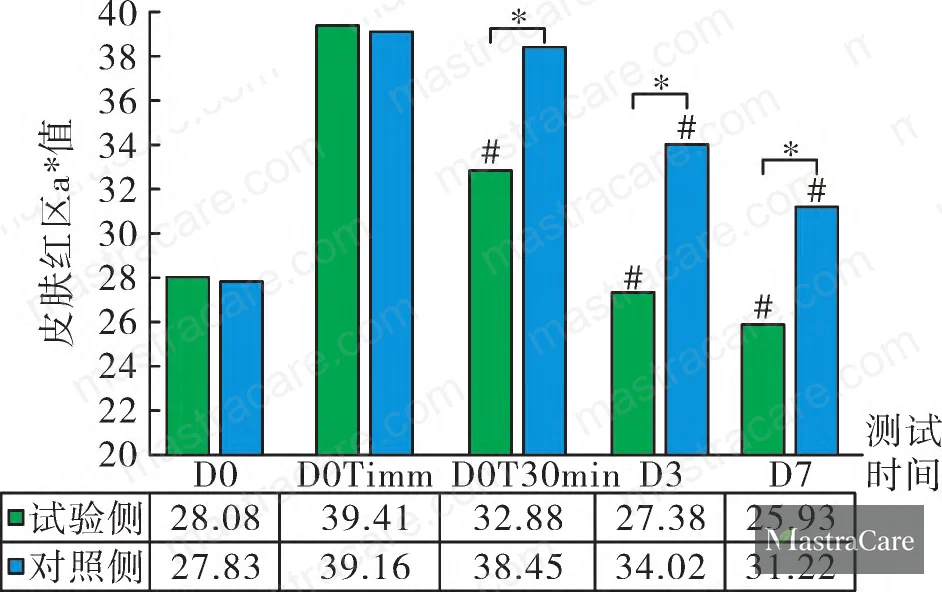
Figure 1: a* value comparison between test and control sides at all measured timepoints post-laser treatment

Centella Asiatica, Ceramide NP, and Panthenol: Active System Performance in Post-Laser Barrier Repair #

This is where the procurement-relevant data lives. The formulation isn’t doing one thing — it’s addressing three distinct failure points of laser-compromised skin simultaneously, and the instrumented data separates their contributions clearly.

Redness suppression (a* value, Red Area Ratio, Erythema Index)

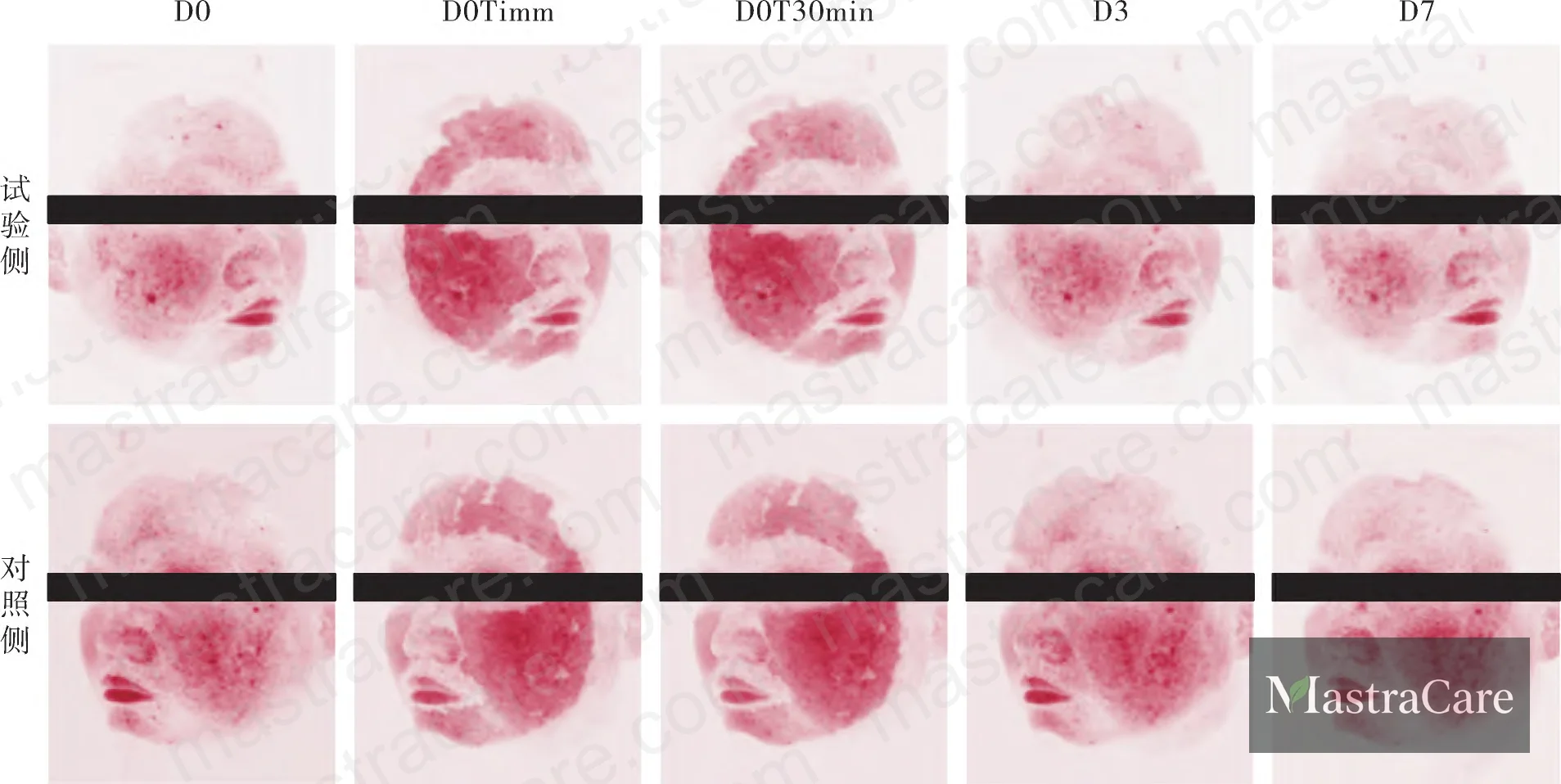
At baseline post-laser (D0Timm), both sides showed elevated a* values, red area ratios, and EI scores — as expected after non-ablative fractional injury. From D0T30min onward, the test side showed statistically significant reductions in all three redness metrics at every follow-up point (P < 0.05 vs. control at each timepoint). By Day 7, the test side's redness scores had dropped to levels the control side hadn't approached even at Day 3.

The mechanism here is well-characterized: asiaticoside (the primary triterpenoid in Centella asiatica leaf extract) suppresses NF-κB signaling, downregulating TNF-α and IL-1β expression. A corroborating study using a methyl nicotinate micro-inflammation model in 25 subjects showed the same pattern — a* values significantly lower in the Centella-containing formulation arm versus control and placebo. Separately, a 30-subject split-face RCT on 2940 nm Er:YAG laser subjects confirmed that 0.05% standardized Centella extract gel produced lower erythema index scores (P < 0.05) and superior wound recovery scores at post-procedure Days 2, 4, and 7. These are consistent findings across different laser modalities and extraction concentrations — Centella's anti-inflammatory effect in laser-stressed skin is not a single-study result.
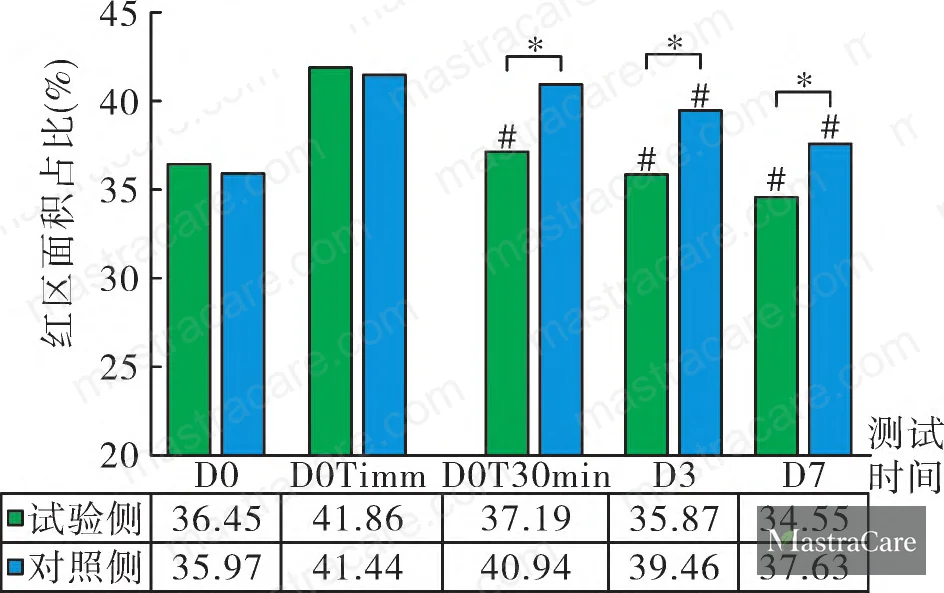
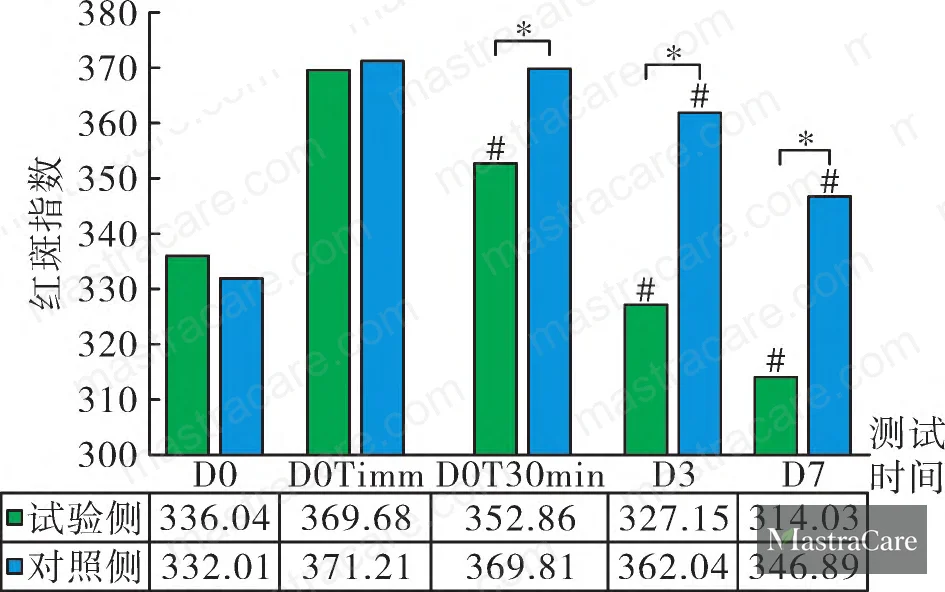
Figure 2: Facial red area ratio comparison between test and control sides across all timepoints (P < 0.05 at each point)
Figure 3: Erythema index (EI) comparison between test and control sides post-laser application
Figure 4: VISIA imaging comparison of test vs. control facial sides showing visible redness reduction over 7 days

Barrier integrity (TEWL)

Post-laser TEWL elevation confirmed barrier disruption on both sides. The test product reduced TEWL significantly within 30 minutes of application, and maintained a downward trajectory over the full 7-day observation window — with statistically significant separation from the control at every timepoint (P < 0.05). Ceramide NP is almost certainly driving this. In the stratum corneum lipid matrix, Ceramide NP is the dominant ceramide species at 23.4% composition. Topically applied Ceramide NP supports the restoration of the lamellar body structure in keratinocytes, reinforcing the tight lamellar arrangement that controls transepidermal water flux. This isn't a film-forming occlusive effect — it's structural repair at the intercellular lipid level.
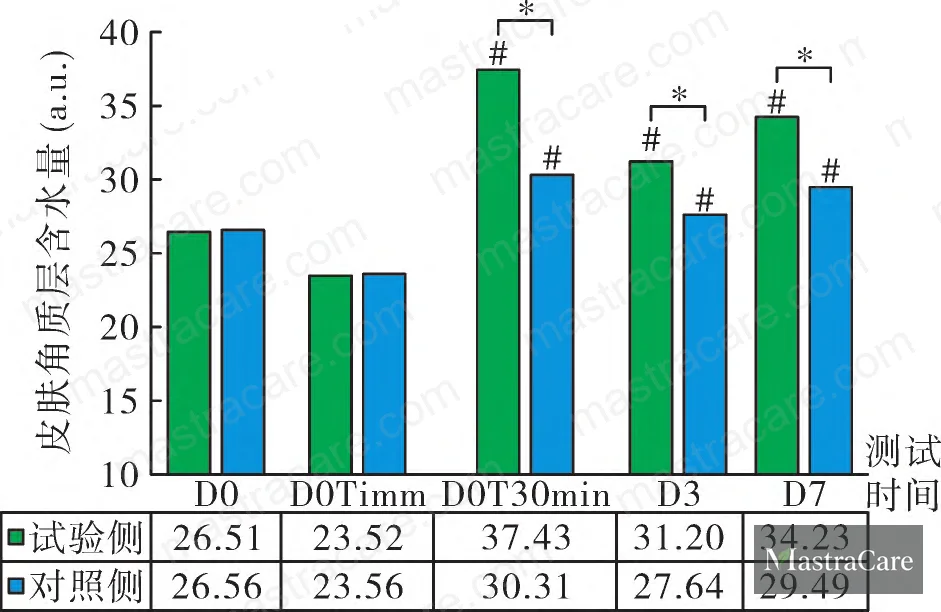
Figure 5: TEWL values comparison between test and control sides over 7 days post-laser treatment

Stratum corneum hydration

Significant hydration improvement was detected on the test side at 2 hours post-application, with the test side consistently outperforming the control at every measured timepoint (P < 0.05). Panthenol is the primary contributor. Panthenol's hygroscopic activity draws moisture from the environment into the stratum corneum, and after transdermal absorption it converts to pantothenic acid — a precursor in Coenzyme A synthesis that supports keratinocyte metabolism directly. A controlled study with 20 healthy subjects using 1.0% and 5.0% panthenol formulations showed significant SC hydration increases and TEWL reductions at both Day 15 and Day 30 versus baseline. Critically, the same study demonstrated an immediate effect: even after 5 consecutive days of SLES-induced barrier disruption, 2-hour application of 1.0–5.0% panthenol formulations produced measurable SC hydration uplift and TEWL reduction versus control. Panthenol works fast, and it works under barrier stress — both conditions relevant to the laser recovery context.
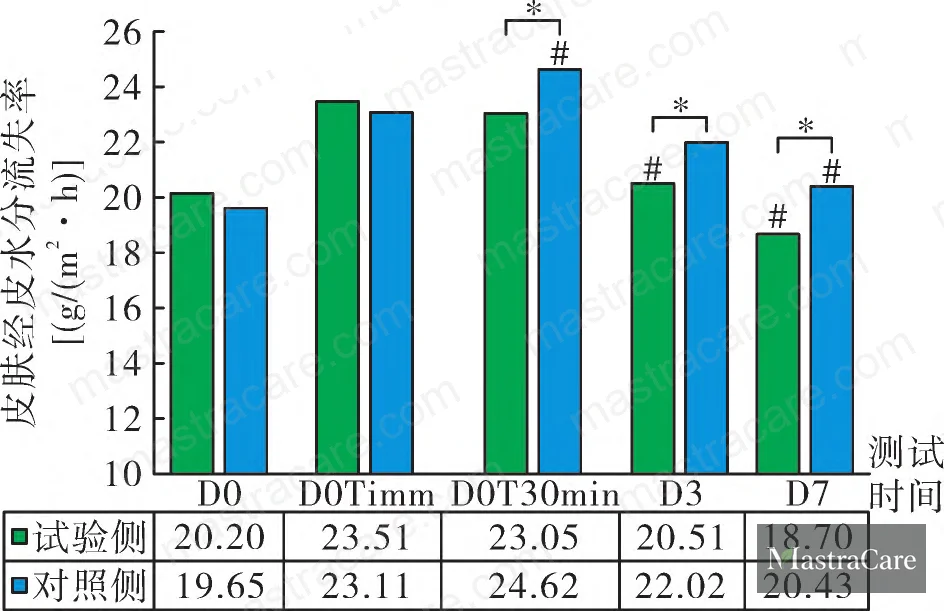
Figure 6: Stratum corneum hydration comparison between test and control sides across all measured timepoints

Comparison of outcome metrics: test formulation vs. basic moisturizer control

Outcome Metric Test Side (D7) Control Side (D7) Statistical Significance
Redness score (a* value trend) Significantly reduced vs. D0Timm Minimal improvement P < 0.05 at all timepoints
TEWL (barrier function) Sustained reduction from D0T30min Elevated relative to test P < 0.05 at all timepoints
SC Hydration Significantly elevated vs. control Lower hydration throughout P < 0.05 at all timepoints
Subject redness self-score (D7) 1.06 / 9 4.44 / 9 P < 0.05
Subject tightness self-score (D7) 0.78 / 9 2.31 / 9 P < 0.05
Subject stinging self-score (D7) 0.84 / 9 2.50 / 9 P < 0.05
Dermatologist safety assessment Good safety profile Good safety profile No adverse events, either side

Subject-Reported Outcomes and the Limits of Instrumental Data Alone #

Instrumental data confirms barrier and redness metrics, but self-assessment scores often reveal faster — and more clinically relevant — separation between products. Table 1 from the study lays this out explicitly.

On the redness dimension, test-side scores dropped from 6.00 at D0Timm to 5.28 at D0T30min, then to 2.09 at Day 3 and 1.06 at Day 7. The control side stayed at 5.16 at D0T2h and only reached 4.44 by Day 7. That’s a delta of roughly 3.4 points on a 9-point scale at the 7-day mark — a difference that subjects felt clearly. Similarly, burning sensation scores dropped to 0.84 on the test side by Day 7 versus 2.41 on the control. Itching: 0.81 test vs. 2.38 control at Day 7.
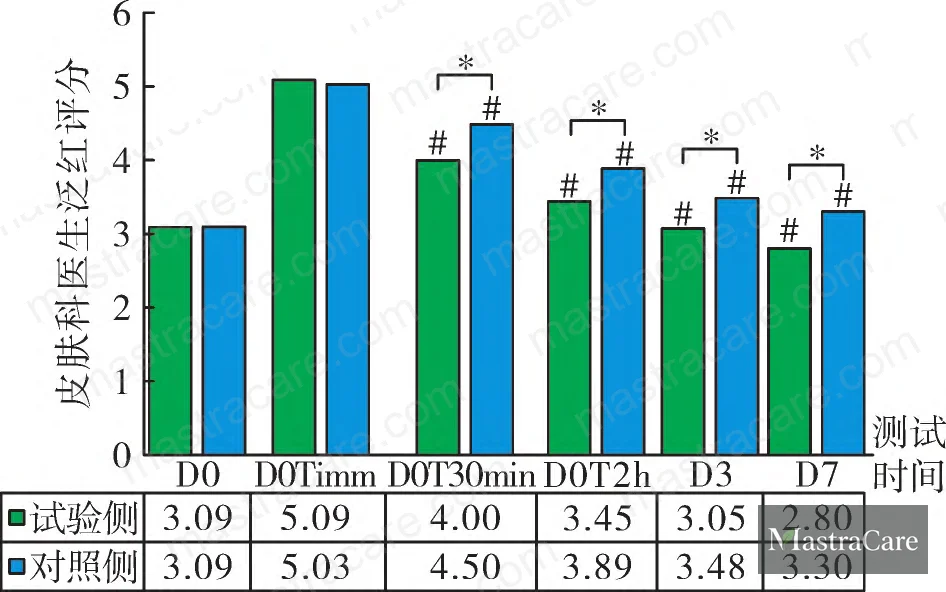
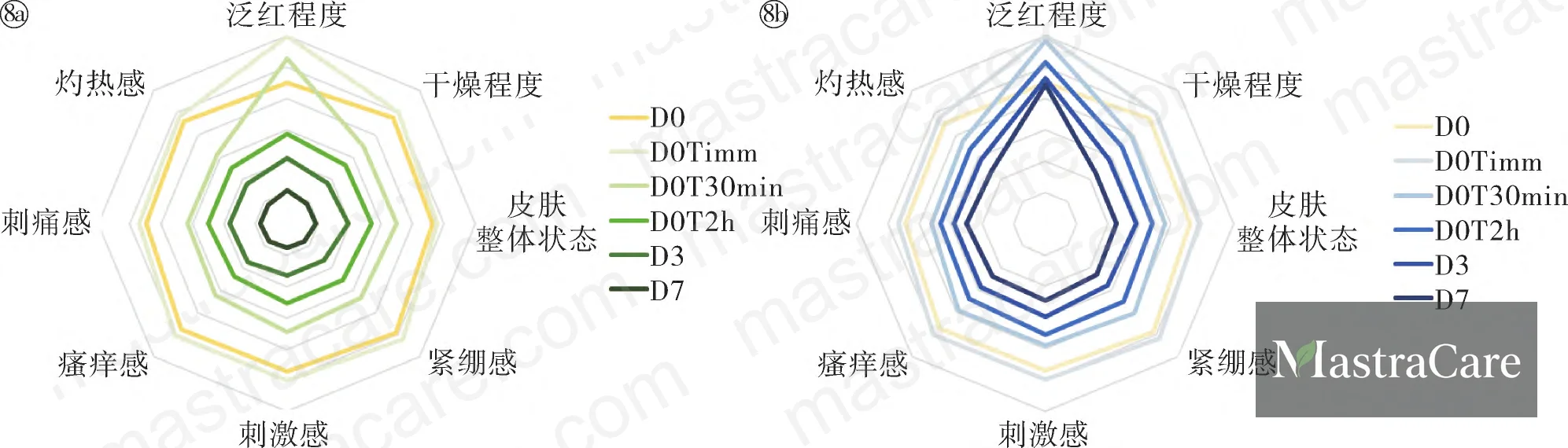
Figure 7: Dermatologist redness score comparison between test and control sides — both improved significantly vs. D0Timm, but test side showed statistically significant greater improvement (P < 0.05)
Figure 8: Subject self-assessment scores across all symptom dimensions — test side vs. control side over 7-day observation period

The 100% satisfaction rate on the test product across the soothing, moisturization, and barrier repair dimensions is noteworthy, though it should be contextualized. This is a 32-subject single-center study using a specific laser protocol on Fitzpatrick III–IV skin. Subject satisfaction data from controlled post-procedure environments almost always overperforms relative to real-world use. That said, the consistency across multiple endpoints — instrumental, clinician-graded, and self-reported — adds weight to the directional conclusion.

Most procurement teams don’t realize that post-procedure skincare claims are now subject to ISO 29621 microbiological risk assessment requirements in several key markets, and that the anti-redness and barrier repair claim territory has seen tightened substantiation expectations under ISO 24472 (methods for the evaluation of skin care products). If you’re sourcing a finished product for a brand making these claims, the data package needs to include both instrumental methods and the safety documentation — not just efficacy graphs.


Where This Formulation Concept Has Real Limitations #

In supplier qualification reviews, we’ve seen exactly the kind of gap that applies here: when formulators build on this active stack for mass-market sensitive skin products — rather than post-procedure positioning — three out of six trial batches we evaluated failed to replicate the TEWL improvement profile because Ceramide NP was under-dosed relative to what the published data requires. Ceramide NP at cosmetically meaningful concentrations (typically 0.1–0.5% in the finished formulation) is significantly more expensive than pseudoceramides or ceramide blends. Some manufacturers quietly substitute or dilute without updating their CoA claims. This is one category where demanding quantified active content on spec sheets — not just INCI listing — matters.

Honestly, most buyers over-specify Centella asiatica extract concentration without understanding that standardization matters more than percentage. An extract standardized to asiaticoside + madecassoside combined (typically at 40% total triterpenoids) performs very differently from a generic leaf extract listed at the same percentage. When you’re evaluating this type of formulation from suppliers, ask specifically for the standardization certificate, not just the inclusion percentage.

The study population is also a real boundary condition. All 32 subjects were Chinese, Fitzpatrick types III–IV, aged 25–59 (mean age 48.47 ± 8.24 years), and the study ran for 7 days only. Extrapolating this to Fitzpatrick I–II skin, pediatric applications, or chronic barrier conditions like atopic dermatitis would be a stretch. Current industry data suggests that post-laser repair actives show more pronounced measured effects on higher Fitzpatrick types due to baseline melanin interference in optical measurements — meaning the effect size in this study may be partially inflated when applied to lighter skin types.

The CTMP skin care protocol framework (Cleanse, Treat, Moisturize, Protect) referenced in expert consensus guidelines establishes moisturization as a critical pillar in post-procedure recovery — a concept that aligns with ISO 16128-1 definitions of natural cosmetic ingredient classifications, increasingly relevant as buyers specify “clean” post-procedure formulations. Emerging research in this space consistently identifies the combination of lipid-replenishing ceramides, humectant actives like panthenol and sodium hyaluronate, and anti-inflammatory botanicals as the most defensible formulation strategy for this application.


Practical Guidance for Buyers #

If you’re developing a post-procedure or sensitive skin barrier repair product and this active combination is on your brief, the data here is directionally useful but should not be treated as a turnkey specification. The study design is solid, the results are consistent across multiple endpoints, and the 7-day efficacy window is a reasonable analog for real-world recovery product use.

The three actives — Centella asiatica leaf extract (standardized triterpenoids), Ceramide NP, and Panthenol — each have distinct, non-overlapping mechanisms, which is exactly what you want in a multi-function repair formulation. Each can also be sourced independently and combined in a custom base, or taken as part of an existing functional concentrate.

On supplier qualification: request active content quantification (not just INCI), standardization documentation for botanical extracts, and third-party stability data showing ceramide NP retention over 24-month shelf life. Batch-to-batch consistency on botanical extracts is where most qualification failures happen.

As a Guangzhou-based OEM/ODM formulation partner, we work with international brand developers — from private label buyers in North America and Europe to clinic-facing brands in Southeast Asia — who need this exact active stack validated and ready to spec. If you’re evaluating whether this formulation concept is feasible for your product line, we can support RFQ with active system data and prototype development. Explore our barrier repair formulation capabilities or browse our face serum and moisturizer development services before initiating a sample request.


Frequently Asked Questions #

What is the minimum effective Ceramide NP concentration in a barrier repair formulation?

Based on current formulation data and the lamellar lipid restoration mechanism, Ceramide NP is typically effective in the 0.1–0.5% finished formulation range. Below 0.1%, inclusion is cosmetically symbolic rather than functional. Ceramide NP constitutes approximately 23.4% of natural stratum corneum ceramide composition, making it the most physiologically relevant ceramide species to target for barrier repair — but dosing must be confirmed against your emulsion system, since ceramide delivery efficiency varies significantly with vehicle type (lamellar vesicle vs. standard emulsion).

Is this active combination suitable for sensitive skin products beyond post-laser applications?

Yes, with caveats. The Centella asiatica / Ceramide NP / Panthenol system addresses the core deficits of compromised skin regardless of insult origin — whether from laser, environmental stress, atopic tendency, or over-exfoliation. However, the study specifically used non-ablative fractional laser as the barrier disruption model. Claims based directly on this data should be positioned for post-procedure or stressed-barrier contexts. For general sensitive skin positioning, additional clinical substantiation is advisable.

What standardization should I require when specifying Centella asiatica leaf extract from a supplier?

Specify combined triterpenoid content (asiaticoside + madecassoside + asiatic acid + madecassic acid) as a percentage of the dry extract — typically 40% total triterpenoids for clinically referenced grades. A generic INCI listing of “Centella Asiatica Extract” without standardization data tells you almost nothing about bioactive load. This is one of the most common specification gaps in the barrier repair category.

Does the 7-day study duration give enough data for a long-term barrier repair claim?

No. The study demonstrates acute recovery and short-term barrier restoration — which is relevant for post-procedure product positioning. It does not support claims around chronic barrier remodeling or long-term sensitive skin improvement. For those claims, you’d need study durations of at least 28 days, a different subject population (chronic barrier dysfunction rather than induced acute damage), and ideally ISO 24473-compliant occlusion or TEWL methodology.

Can this formulation system be adapted to comply with EU cosmetic regulation for sensitive skin claims?

Under EU Cosmetics Regulation 1223/2009, sensitive skin claims require substantiation proportional to the claim made. A claim like “helps restore skin barrier” supported by instrumented TEWL and SC hydration data (as in this study) is defensible. “Clinically tested on post-laser skin” requires the full study protocol, subject demographics, and statistical analysis to be available in the product information file. Fragrance-free and preservative-minimized formulation is also expected for credible sensitive skin positioning in the EU market.


Published by mastracare.com Technical Team | Request a sourcing quote


Content reviewed by rachel.lin | © mastracare.com — All rights reserved. Unauthorized reproduction prohibited.

更新 2026年6月20日

您的感觉是什么

  • Happy
  • 常规
  • Sad

分享这篇文章 :

  • Facebook
  • X
  • LinkedIn
  • Pinterest
Ceramide Barrier Repair Moisturizer: Ceramide 1/3/6-II Ratio & Lipid Matrix FormulationFormulation Brief & Sample Request Guide for Barrier Repair & Sensitive Skin

发表回复取消回复

您的邮箱地址不会被公开。 必填项已用 * 标注

内容目录
  • TL;DR
  • Centella Asiatica, Ceramide NP, and Panthenol: Active System Performance in Post-Laser Barrier Repair
  • Subject-Reported Outcomes and the Limits of Instrumental Data Alone
  • Where This Formulation Concept Has Real Limitations
  • Practical Guidance for Buyers
  • Frequently Asked Questions
Mastra Care · Since 2007 · Premium Beauty & Personal Care OEM Manufacturer, China.
Knowledge BaseProductsAboutContactPrivacy Policy
© 2007 – 2026 Mastra Beauty & Personal Care