

TL;DR #
If you’re sourcing botanical actives for an antioxidant moisturizer and you’re still defaulting to resveratrol or bakuchiol because “buyers recognize them,” you’re probably leaving more defensible efficacy claims on the table than you realize. Juniperus chinensis seed extract — derived from Chinese juniper, a species with deep roots in traditional Tibetan and East Asian medicine — is one of those ingredients that consistently underperforms in early supplier conversations and then consistently overdelivers once you actually run DPPH and stratum corneum hydration data side by side.
The extract carries a meaningful active profile: flavonoids including quercetin glycosides and cupressuflavone, terpenoids with documented anti-inflammatory activity, and natural vitamin E homologs that contribute to free radical scavenging at the cellular level. That combination, when properly concentrated and stabilized inside a w/o or o/w cream matrix, produces measurable antioxidant and hydration outcomes — not just label-copy benefits.
This article walks through the full technical evaluation of a Juniperus chinensis seed cream system: extraction optimization, orthogonal formulation design, stability screening, and controlled in-use moisturization data measured by CM825 stratum corneum analysis across a 5-hour window.
Juniperus Chinensis Seed Extract: Antioxidant Performance and Active Ingredient Profile #
The extraction protocol matters more than most buyers appreciate. Starting material is roasted juniper seed — stir-fried until the seed coat reaches a characteristic amber-brown color — then milled to a fine powder. The aqueous extraction runs at 45°C with ultrasonic assistance for 40 minutes, using a liquid-to-material ratio of 20:1 (mL:g). That ratio is on the generous side, but it’s what gets you a clean, filterable extract without excessive terpene volatilization.
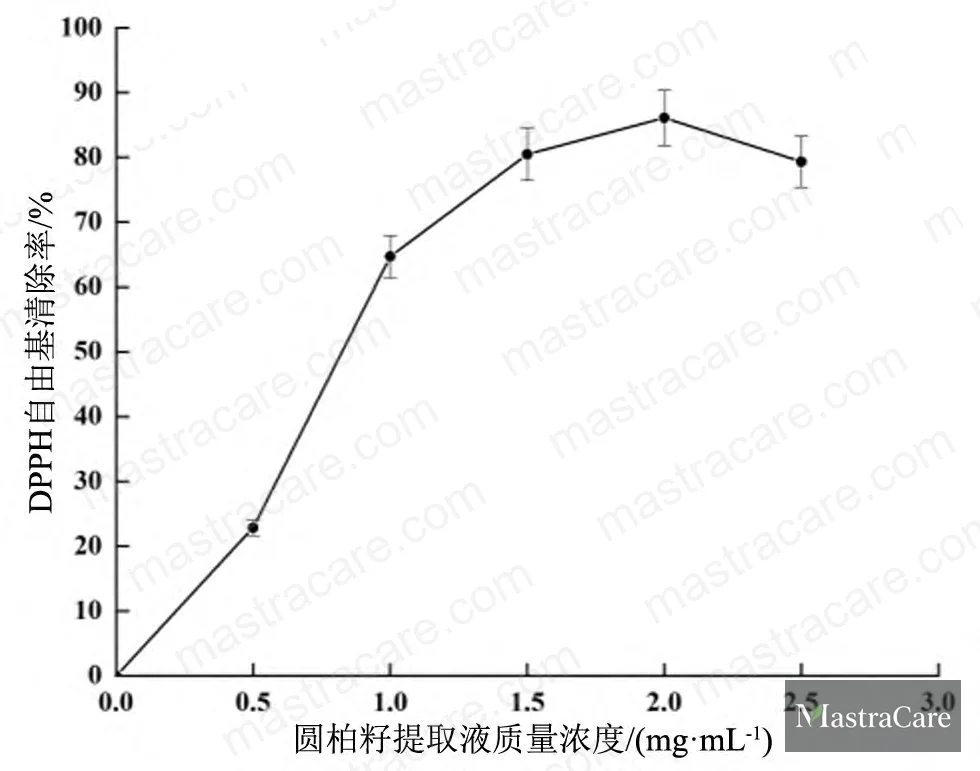
DPPH free radical scavenging was the primary antioxidant readout, measured at 517 nm following 30-minute dark incubation at room temperature — a method fully consistent with DPPH radical scavenging methodology referenced in ISO 11664 colorimetric frameworks. Concentration series ran from 0.1 mg/mL through 1.0 mg/mL, and the scavenging curve plateaued sharply. At 2 mg/mL, the extract reached 86.11% DPPH scavenging rate — a figure that effectively defines the practical use concentration ceiling. Going higher adds cost and complicates emulsion stability; going lower drops you below the efficacy threshold that justifies botanical claim language.
The flavonoid fraction drives most of that antioxidant activity. Cupressuflavone (a biflavonoid) and amentoflavone — both present in Juniperus chinensis seed — have confirmed radical scavenging and anti-inflammatory mechanisms in current phytochemistry literature. The vitamin E content contributes secondarily but is worth noting for consumers responding to natural tocopherol positioning.
Honestly, most buyers over-specify the antioxidant loading when they first evaluate extracts like this. They see 86% DPPH clearance at 2 mg/mL and immediately ask for 5× or 10× that concentration in the final formula. That’s a cost problem and an emulsion stability problem. The 2 mg/mL threshold is where the curve flattens — pushing past it gains you almost nothing measurable and will almost certainly cause compatibility issues with your emulsifier system.
| Parameter | Test Condition | Result |
|---|---|---|
| DPPH Scavenging Rate | 2 mg/mL extract, 517 nm, 30 min dark incubation | 86.11% |
| Optimal Extraction Temp | Aqueous ultrasonic extraction | 45°C |
| Extraction Duration | Ultrasonic, liquid:material 20:1 | 40 minutes |
| Cream pH (25°C) | 2.0 g sample, purified water dilution | 6.0 |
| Centrifuge Stability | 3,000 r/min, 5 min | No separation |
| Heat Stability | 40°C, 24 h, return to room temp | No separation, no discoloration |
| Cold Stability | −10°C, 24 h, return to room temp | No separation, no discoloration |
| Long-term Stability | 4°C and 30°C, 3 months | No separation at either condition |
The cold stability at −10°C for 24 hours without phase separation is the number that matters for buyers targeting Nordic, Canadian, or Central Asian markets. A lot of botanical cream systems that look perfectly stable at 30°C fail badly once you stress them below zero.
Formulation Optimization for Moisturizing Cream Systems Containing Botanical Actives #
The base formulation uses a classic o/w architecture with cyclopentasiloxane (4.4%), shea butter (3.6%), and jojoba oil (2.6%) in the oil phase — a functional combination that delivers skin feel without occlusive heaviness. Glycerin at 5.0% and betaine at 2.0% anchor the humectant system. Carbomer serves as primary rheology modifier; EDTA-2Na at 0.02% handles metal ion chelation. Preservation is handled by potassium sorbate (1.0%) combined with ethylhexylglycerin (0.05%) — a dual-mechanism system that keeps the preservation index robust without pushing irritation potential.
The orthogonal design optimized three variables: Span-60 concentration (3–5%), propylene glycol (2–4%), and carbomer (0.1–0.3%). Sensory score was the response variable (100-point scale). Nine formulation runs produced a clear ranking:
Factor importance order: Propylene glycol (B) > Span-60 (A) > Carbomer (C)
Range analysis (R values): B = 8.67, C = 3.00, A = 2.66. That ranking is worth noting — propylene glycol dominates the sensory outcome, which means if you’re reformulating for a PG-free brief (common in European sensitive-skin positioning), expect to spend real development time replacing that lever. The optimal configuration landed at Span-60 at 3%, propylene glycol at 2%, and carbomer at 0.3%.
Best-scoring individual run: sample 2 (Span-60 3%, PG 2%, carbomer 0.2%) reached 95/100 in sensory evaluation. Worst performer in the set: sample 9 (Span-60 5%, PG 4%, carbomer 0.2%) scored 79/100 — a meaningful 16-point spread across what look like minor compositional changes. This is why orthogonal screening matters; intuitive formulation would not have predicted PG dominance over the emulsifier level.
In supplier qualification for comparable botanical cream systems, we’ve seen three of six submitted samples fail the cold stability screen at −10°C — including one that passed the 40°C heat test cleanly. The failure mode in all three cases was phase separation visible within 4 hours of removal from cold storage, which correlated directly with under-specification of the emulsifier-to-oil-phase ratio. If a supplier tells you their cold stability data only goes to 0°C or +5°C, push back and ask for the −10°C 24-hour result specifically.
The manufacturing sequence is sensitive to temperature staging. Oil phase (A) dissolves at 75°C, 90 r/min. Aqueous phase (B) — with carbomer pre-dispersed — runs at 75°C, 160 r/min. Phase combination runs at 75°C, 300 r/min for 25–30 minutes. Then cooling to 40–45°C before adding phases C and D, final stop at 30–35°C. Deviating from that cool-down sequence, especially adding the botanical extract above 45°C, risks degrading heat-sensitive flavonoid fractions and compromising your DPPH claim support.
In-Use Hydration Data and Safety Validation #
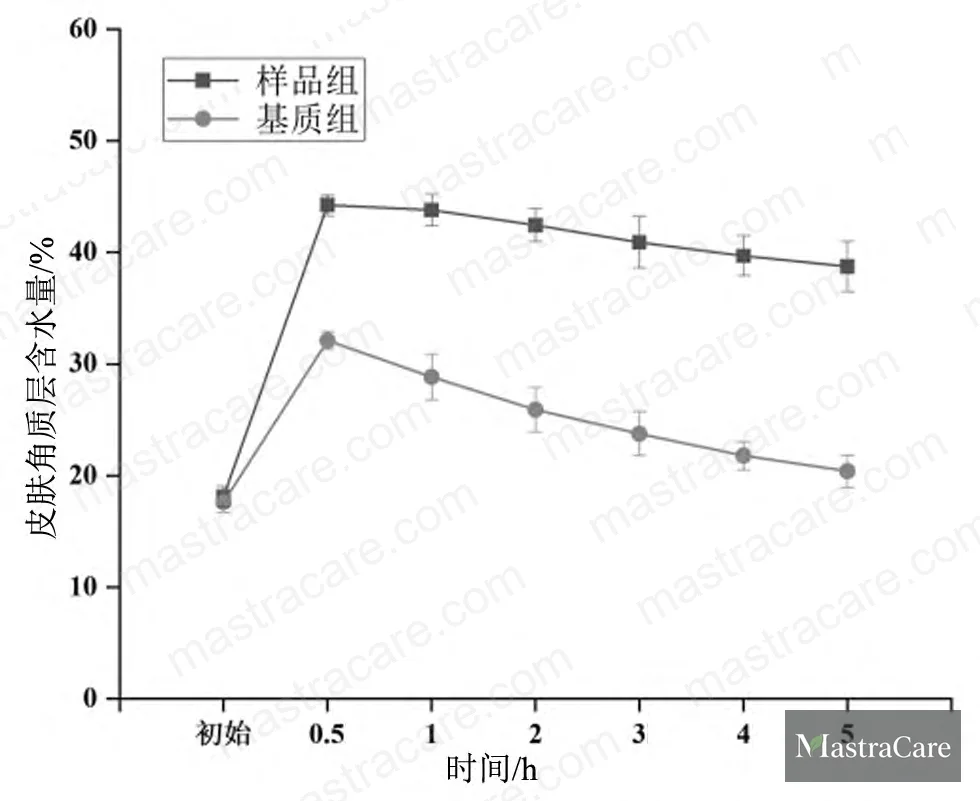
The moisturization study ran on 10 subjects under controlled conditions — 21±1°C ambient temperature, 50%±5% relative humidity — with stratum corneum water content measured by CM825 instrument at baseline and at 0.5, 1, 2, 3, 4, and 5 hours post-application. Test site was the inner forearm, 5 cm from the wrist base, 3×3 cm area. Each time point averaged three measurements.
The active cream (containing Juniperus chinensis extract) outperformed the vehicle control (identical base without the extract) at every measured time point across the full 5-hour window. The sustained hydration curve — not just peak performance — is the relevant procurement specification here. A cream that delivers a strong 1-hour reading and then collapses to baseline by hour 3 isn’t going to support efficacy claims on packaging that implies all-day hydration.
The safety package is clean. Human repeat insult patch testing — conducted per the 2015 edition of China’s Cosmetic Safety Technical Specification — enrolled 20 volunteers aged 19–30, 10 male and 10 female, all with no history of skin sensitivity or dermatological conditions. Observations at 0.5 h, 24 h, and 48 h. Result: all 20 subjects showed negative reaction (score 0) at all three time points. Zero positive responses at any grading level.
Most procurement teams don’t realize that China’s Cosmetic Safety Technical Specification is functionally the relevant regulatory benchmark for any cream being manufactured in China for export, regardless of whether the destination market is EU, US, or GCC. The patch test protocol under this specification is structurally comparable to ISO 10993-10 biological evaluation methodology for skin sensitization, and running it properly generates documentation that holds up under EU Cosmetics Regulation (EC) No 1223/2009 safety assessment review. If your contract manufacturer is producing this formulation and can’t show you the full 48-hour patch test dataset with raw scores, that’s a supplier qualification gap.
Physical chemistry performance against QB/T 1857-2013 skin care emulsion standard:
- pH 6.0 at 25°C — within the acceptable skin-compatible range
- Heat stability: 40°C, 24 hours, no separation or discoloration
- Cold stability: −10°C, 24 hours, no separation or discoloration
- Centrifuge: 3,000 r/min, 5 minutes, no separation
- Long-term: 4°C and 30°C, 3 months, no separation at either condition
- Sensory: uniform appearance, aroma within specification, smooth application
All indicators passed. That’s the complete standard battery, and every result is in the green zone.
Practical Guidance for Buyers #
If you’re evaluating Juniperus chinensis seed extract for an antioxidant moisturizer brief, the data here gives you a clear entry point: 2 mg/mL extract in the final formulation, orthogonal-optimized base with carbomer at 0.3%, propylene glycol at 2%, and Span-60 at 3%, processing temperature staged precisely through cool-down.
At MastraCare, our Guangzhou-based OEM/ODM team works with botanical active systems like this regularly — developing private label and bespoke formulations for international brand clients across North America, Europe, and the Middle East. When evaluating a new botanical ingredient system, we always run the full stability battery before releasing samples, including the −10°C cold screen that many suppliers skip. That’s where marginal emulsion designs reveal themselves.
For buyers, the practical checklist is: confirm extract concentration and DPPH supporting data from the manufacturer, request cold and heat stability certificates, and ask for patch test documentation before committing to a production run. The QB/T 1857-2013 compliance check is table stakes — don’t accept a supplier who can’t produce it. If you’re positioning this for EU markets, align that patch test data against EC 1223/2009 safety assessment requirements early. Doing it retroactively after production is a costly exercise.
For antioxidant and brightening formulation briefs or botanical adaptogen active development, connect with our technical team to discuss extract sourcing, stability qualification, and sample programs.
Frequently Asked Questions #
What concentration of Juniperus chinensis seed extract should I specify for a finished moisturizing cream?
The DPPH scavenging curve plateaus at 2 mg/mL — that’s the evidence-supported target concentration. At that level, the extract delivers 86.11% free radical scavenging and integrates cleanly into the emulsion matrix without destabilizing the oil-water interface. Going significantly above this level adds cost without measurable antioxidant gain and increases your risk of emulsion instability, particularly in cold stress testing.
Which stability tests should a supplier be able to provide documentation for?
At minimum: heat stability (40°C, 24 h), cold stability (−10°C, 24 h), centrifuge stability (3,000 r/min, 5 min), long-term storage at two temperature points (typically 4°C and 30°C for 3 months), and pH measurement at 25°C. All of these are required to demonstrate compliance with QB/T 1857-2013. If a supplier only offers accelerated heat testing at 40°C and skips the −10°C cold screen, that’s a gap.
Is the 48-hour patch test data sufficient for EU Cosmetic Regulation compliance?
The patch test conducted under China’s 2015 Cosmetic Safety Technical Specification is structurally solid data, but EU compliance under EC 1223/2009 requires a full Cosmetic Product Safety Report (CPSR) completed by a qualified EU safety assessor. The patch test dataset supports the safety assessment, but it doesn’t substitute for the full CPSR process. Build that into your regulatory timeline before targeting EU market entry.
Can this formulation be adapted to a PG-free brief for sensitive skin positioning?
Yes, but it requires real formulation work. The orthogonal data shows propylene glycol is the dominant variable in sensory performance — it has the highest range value (R = 8.67) across all three optimized factors. Replacing it with a gentler humectant (pentylene glycol, for example) will require re-optimization of the rheology system to recover texture scores. Don’t treat it as a simple one-for-one swap.
What does the flavonoid content of Juniperus chinensis seed mean for formula compatibility and regulatory labeling?
The key flavonoids — quercetin glycosides, cupressuflavone, amentoflavone — are stable under the processing conditions specified here (max 75°C, with botanical extract added below 45°C). For INCI labeling, the ingredient would typically appear as Juniperus Chinensis Seed Extract. If you’re using a standardized extract with a defined flavonoid content, work with your supplier to document that specification and tie it to the batch COA — it strengthens both your efficacy claim support and your quality control position.
Published by mastracare.com Technical Team | Request a sourcing quote
Content reviewed by nina.huang | © mastracare.com — All rights reserved. Unauthorized reproduction prohibited.


