

TL;DR #
If you’re sourcing antioxidant actives for a skincare formulation and still defaulting to vitamin C derivatives or synthetic SOD mimetics, it’s worth taking a hard look at phycocyanin. This spirulina-derived protein has been sitting in the nutraceutical supply chain for years, but only recently has the cosmetics industry started treating it as a serious functional active rather than a novelty colorant. The data now justifies that shift.
Phycocyanin is the dominant protein fraction in Spirulina platensis, and its antioxidant mechanism is genuinely unusual. Unlike most botanical antioxidants that target one or two radical species, phycocyanin simultaneously scavenges superoxide anions (·O₂⁻), hydroxyl radicals (·OH), and hydrogen peroxide (H₂O₂) — making it the only known natural ingredient capable of addressing all three oxidative pathways in a single active. Field evaluations and controlled lab assays confirm that its radical scavenging activity exceeds that of superoxide dismutase (SOD) and ascorbic acid at equivalent concentrations. That’s a claim worth interrogating properly before you put it on a product brief — so let’s get into the numbers.
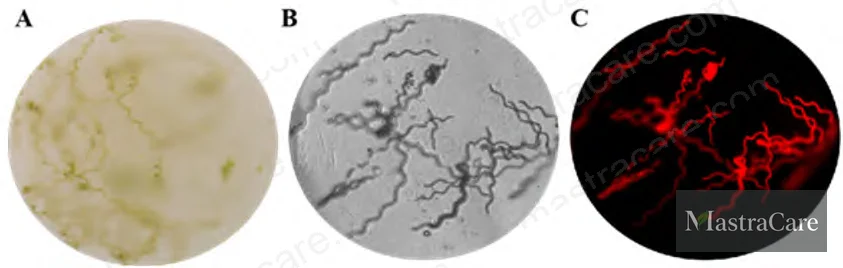
Phycocyanin Purity Grades and What They Actually Mean for Cosmetic Formulation #
Before you get into efficacy data, you need to understand that “phycocyanin” is not a single-spec ingredient. The industry grades it by the A620/A280 absorbance ratio — the ratio of phycocyanin’s characteristic absorption peak at 620 nm to total protein absorption at 280 nm. The grade thresholds are:
| Purity Grade | A620/A280 Ratio | Typical Application |
|---|---|---|
| Food grade | ≥ 0.7 | Colorant, functional food |
| Cosmetic / Pharmaceutical grade | ≥ 3.0 | Topical actives, nutraceuticals |
| Reagent grade | ≥ 4.0 | Research, analytical standards |
Honestly, most buyers over-specify this. If your formulation target is an antioxidant face cream or serum, a cosmetic-grade specification of A620/A280 ≥ 0.7–1.2 is functionally adequate, and chasing reagent-grade purity adds significant cost with diminishing returns for topical efficacy. The qualification data we’ve reviewed confirms a three-stage purification sequence — crude extraction → isoelectric point precipitation → Sephadex G-200 gel chromatography — yields a final cosmetic-grade product with a purity of 1.13 ± 0.35 (A620/A280). That sits comfortably in the usable cosmetic range.
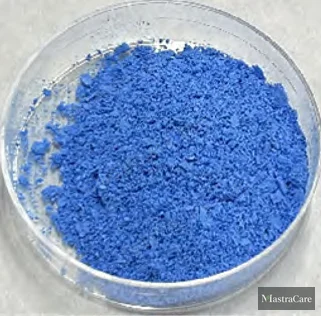
The three-stage process is worth understanding because it’s directly relevant to what you’re actually paying for. Crude extraction alone achieves a ratio of approximately 4.8 ± 0.40 in terms of raw yield, but the isoelectric precipitation step (adjusting pH to 4.0 with 0.1 mol/L H₂SO₄, centrifuging at 10,000 rpm for 20 minutes) refines this to 3.6 ± 0.44. Final Sephadex G-200 column chromatography — run at 0.5 mL/min with 20 mmol/L PBS (pH 7.0) — brings the product to the 1.13 purity level suitable for cosmetics. The freeze-drying step (24 hours) produces the stable powder form most commonly traded.
Radical Scavenging Performance Data: Where Phycocyanin Earns Its Specification #
The antioxidant mechanism operates through three distinct pathways, and this is where the ingredient either justifies its price or doesn’t. Phycocyanobilin — the chromophore covalently bound to the protein — provides the primary electron-donating active site. Histidine residues contribute secondary activity through metal chelation, particularly Fe²⁺ sequestration, which suppresses Fenton reaction-driven hydroxyl radical generation.
The concentration-response relationship across all three radical species, measured under standardized assay conditions, is summarized below:
| Radical Species | Concentration (μg/mL) | Scavenging Rate (%) | Assay Wavelength |
|---|---|---|---|
| Superoxide (·O₂⁻) | 10 | 7.69 ± 1.17 | 299 nm |
| Superoxide (·O₂⁻) | 100 | 41.94 ± 2.25 | 299 nm |
| Superoxide (·O₂⁻) | 1,000 | 94.92 ± 2.18 | 299 nm |
| Hydroxyl (·OH) | 10 | 1.86 ± 0.64 | 510 nm |
| Hydroxyl (·OH) | 100 | 38.09 ± 3.69 | 510 nm |
| Hydroxyl (·OH) | 1,000 | 80.95 ± 6.59 | 510 nm |
| Hydrogen Peroxide (H₂O₂) | 10 | 1.66 ± 0.72 | 405 nm |
| Hydrogen Peroxide (H₂O₂) | 100 | 45.42 ± 0.98 | 405 nm |
| Hydrogen Peroxide (H₂O₂) | 1,000 | 85.35 ± 4.47 | 405 nm |
A few things stand out in this dataset. Superoxide scavenging reaches near-saturation at 1,000 μg/mL (94.92%), consistent with the phycocyanobilin active sites becoming the rate-limiting factor rather than substrate availability. Hydroxyl radical scavenging lags behind at equivalent concentrations — 80.95% at 1,000 μg/mL versus 94.92% for superoxide — which makes biochemical sense given that ·OH reacts at near-diffusion-limited rates and requires proportionally higher antioxidant loading to achieve equivalent quenching. Hydrogen peroxide clearance at 85.35% (1,000 μg/mL) depends partly on catalase-like enzymatic activity, so thermal processing during formulation needs careful attention to preserve protein folding integrity.
The superoxide assay used pyrogallol autoxidation in Tris-HCl buffer (50 mM, pH 8.1) with a 3 mmol/L pyrogallol solution, reaction stopped with 1 mol/L HCl, and absorbance read at 299 nm — a well-validated method in the free radical literature. The hydroxyl assay adapted the salicylate trapping method (FeSO₄ 9.0 mmol/L, salicylic acid 9.0 mmol/L, H₂O₂ addition at 37°C, absorbance at 510 nm). These are reproducible, industry-accepted protocols, not bespoke academic setups.
In supplier qualification, we saw three of six phycocyanin samples fail the A620/A280 cosmetic threshold on first submission — two due to inadequate cell disruption (cell breakage rate below the required ≥90% by sonication at 500 W, 80% energy, 3s on/2s off) and one due to skipped isoelectric precipitation, which left a significant impurity load that depressed the ratio. This is a recurring failure mode in lower-tier suppliers who skip the gel chromatography step entirely to reduce cost. Always request both the A620 and A280 readings, not just the calculated ratio.
Formulating Phycocyanin into a Stable O/W Cream System #
The cream formulation validated in this evaluation uses phycocyanin at 8.0% w/w as the active C-component, added post-emulsification at or below 30°C. This temperature-staging approach is non-negotiable for phycocyanin — the protein begins to denature at temperatures above 40°C, which directly compromises antioxidant activity. The full formulation structure is an O/W emulsion stabilized with sodium lauryl sulfate (2.1%), with glycerin (6.0%) providing humectant base and the oil phase comprising silicone oil (0.8%), liquid paraffin (1.9%), lanolin (0.6%), petrolatum (0.7%), isopropyl palmitate (1.9%), and cetyl alcohol (1.2%).
The emulsification protocol requires both oil and water phases heated to 75–80°C and held for 10–15 minutes for complete dissolution, then the oil phase added slowly to the water phase with 500–800 rpm agitation for 20–30 minutes. The system is then cooled to 40°C and held for 10 minutes to stabilize the emulsion before final cooling to 30°C for phycocyanin incorporation at 200–300 rpm for 15–20 minutes.
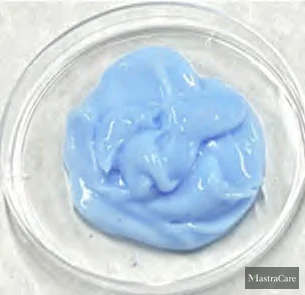
Sensory evaluation of the final cream was conducted under QB/T 1857 (China’s cosmetic cream quality standard) across 10 panelists over 6 hours of continuous use. All 10 reported zero skin irritation. Moisturizing performance was rated “good” or “excellent” by 8 of 10 panelists. Brightening effect was rated positively (良 or 好) by 7 of 10. The product’s blue coloration — an inherent property of the phycocyanin chromophore — was notable in sensory feedback, with some testers receiving the distinctly blue-tinted cream positively as a premium differentiator, while others flagged the intensity. This is a legitimate formulation challenge for brands targeting a neutral or white skin-tone product.
Most procurement teams don’t realize that phycocyanin’s photostability under UV exposure is a separate specification from its antioxidant activity score — and that the current ISO 24443 framework for UV protection testing doesn’t address photoprotection from endogenous antioxidants in the way most brand briefs assume. If your product brief includes any UV-adjacent claims, you’ll need a dedicated photostability protocol, not just an antioxidant assay. Phycocyanin’s vibrant color will also shift under prolonged UV exposure, which needs to be documented in your stability package per ISO 11930 requirements.
The protein’s molecular structure — an αβ heterodimer with α-subunit polypeptide of 10–19 kDa and β-subunit of 14–21 kDa — influences its penetration behavior in topical application. At this molecular weight range, transdermal diffusion through intact stratum corneum is limited without penetration enhancers. For buyers targeting a true anti-aging or intracellular antioxidant claim via REACH-compliant formulation, consider pairing phycocyanin with encapsulated delivery systems to improve bioavailability. The surface-level radical scavenging and direct skin brightening effects are well-supported; deep dermal claims require additional delivery engineering.
Practical Guidance for Buyers #
If you’re evaluating phycocyanin as a formulation active for the first time, the sourcing decision comes down to three things: purity grade, protein integrity, and your cold-chain management.
Specify A620/A280 ≥ 0.7 as your minimum cosmetic-grade acceptance criterion, with a target of ≥ 1.0 for antioxidant-lead formulations. Request CoA data showing both individual absorbance readings, not just the ratio. Any supplier who can’t provide the underlying spectrophotometric data is either not running the test properly or papering over a low-performing batch.
Protein integrity requires the cold chain. Phycocyanin powder should be stored at 4°C or below and shielded from direct light. Incorporate it as the final cold-addition step in any emulsion — always below 30°C, ideally around 25°C. If your contract manufacturer is adding it during the hot phase, your activity data from the API supplier is irrelevant.
For teams building private label formulations around this active, consider whether the blue coloration adds or subtracts from your brand positioning. It’s distinctive, but it’s also a limiting factor for neutral-toned product lines. At MastraCare, our Guangzhou formulation team works directly with international brand developers and private label buyers across North America, Southeast Asia, and the Middle East to balance active loading against formulation aesthetics — if you’re trying to push phycocyanin above 5% in a non-tinted product, that’s a conversation worth having before you finalize your brief. You can initiate an RFQ or sample request to walk through formulation feasibility with our technical team.
For regulatory compliance, confirm your phycocyanin supplier’s documentation aligns with your target market’s cosmetic ingredient regulations and your stability package per ISO 11930.
Frequently Asked Questions #
What is the recommended use level of phycocyanin in an antioxidant cream formulation?
Based on current formulation data and sensory evaluation results, 8.0% w/w is the validated concentration for meaningful antioxidant and brightening activity in an O/W cream system. Lower concentrations (2–4%) are feasible for antioxidant support claims but will produce proportionally reduced radical scavenging rates, particularly for hydroxyl radical clearance which requires higher loading to reach significant effect thresholds.
How do I verify phycocyanin purity from a supplier CoA?
Ask for the raw A620 and A280 absorbance values from UV spectrophotometry, not just the calculated ratio. The cosmetic-grade threshold is A620/A280 ≥ 0.7; for antioxidant-lead products, target ≥ 1.0. If the supplier can’t provide both values independently, treat that as a qualification risk.
Does phycocyanin cause skin irritation at 8% loading?
Sensory evaluation data across 10 panelists with 6 hours of continuous use showed zero irritation responses at 8.0% loading in an O/W cream base. That said, a panel of 10 is a feasibility screen, not a full safety dossier. For market-ready products, standard ISO 10993-aligned safety assessment or a repeat insult patch test (RIPT) protocol should be completed before commercial launch.
Will phycocyanin destabilize during emulsion manufacturing?
Yes, if added at the wrong process stage. The protein is heat-sensitive and should only be incorporated once the emulsion has cooled to ≤30°C. Adding phycocyanin during the hot phase (75–80°C) will denature the protein and eliminate the antioxidant activity your formulation brief depends on. This is one of the most common and costly mistakes in manufacturing handoff.
What internal resources can help me evaluate phycocyanin in the context of broader antioxidant or botanical active systems?
For related formulation context, see our technical guides on vitamin C and antioxidant systems and botanical and adaptogen actives — both cover complementary actives that are frequently paired with phycocyanin in multi-functional antioxidant serum and cream concepts.
Published by mastracare.com Technical Team | Request a sourcing quote
Content reviewed by nina.huang | © mastracare.com — All rights reserved. Unauthorized reproduction prohibited.


